


Malaysia's auto sector faces moderate outlook amid competition, forex challenges
Translated from Malay, summarized and contextualized by DistantNews.
At a glance
News
Named sources
Context piece
- Malaysia's automotive sector is projected to remain moderate due to intense market competition and unfavorable foreign exchange rates, according to CIMB Research.
- The total industry volume (TIV) is expected to strengthen in the second half of 2026, supported by subsidies, seasonal factors, EV momentum, and stable financing.
- Policy changes favoring local EV assembly, such as increased cost, insurance, and freight (CIF) thresholds and lower motor power requirements, are expected to boost competitiveness.
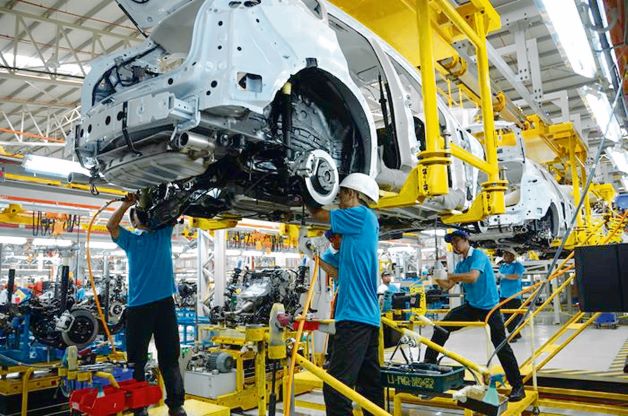
Malaysia's automotive sector is anticipated to maintain a moderate performance, facing challenges from increasing market competition and adverse foreign exchange rate movements, according to CIMB Research. Despite these headwinds, the research firm projects a stronger showing for the total industry volume (TIV) in the latter half of the 2026 financial year.
This expected improvement in the second half is attributed to several factors, including the continuation of subsidies, typical seasonal demand patterns, the growing momentum of electric vehicles (EVs), and stable financing conditions. CIMB Research has maintained a "neutral" rating for the sector, noting that the TIV for the first five months of 2026 (5M26) saw a slight year-on-year decrease of 1.2 percent, reaching 315,476 units. However, the firm anticipates a recovery, with 2H26 performance aligning with historical seasonal trends.
Key drivers for the anticipated rebound include the ongoing Budi95 subsidy program and the expansion of the Budi Diesel subsidy. The Malaysian Automotive Association (MAA) expects the Budi Diesel expansion to stimulate demand in the pickup truck segment, which experienced a 16.7 percent year-on-year sales decline in the first five months of 2026.
Simultaneously, EV sales are projected to continue their upward trajectory in the second half of 2026, fueled by more aggressive promotional campaigns and increased production from national automakers like Proton and Perodua. Government policies, such as raising the minimum Cost, Insurance, and Freight (CIF) threshold to RM200,000 and lowering the minimum motor power requirement to 180 kilowatts (kW), are making locally assembled EVs more competitive. CIMB Research believes these policy shifts will not deter long-term EV adoption, as consumer demand remains robust. The firm forecasts a 6.9 percent year-on-year increase in the automotive sector's net profit for FY2026, largely driven by stronger earnings contributions from Sime Darby.
DistantNews Editorial
Originally published by Utusan Malaysia in Malay. Translated, summarized, and contextualized by our editorial team with added local perspective. Read our editorial standards.
More Stories


From Our Blog

What Gets Lost (and Found) When News Is Translated

The Critical Role of Diaspora Media in Global News

What Travellers Should Know About Countries with Restricted Press

A Digital Nomad's Guide to Following Local News

How the Same Story Looks Different in Different Countries
