

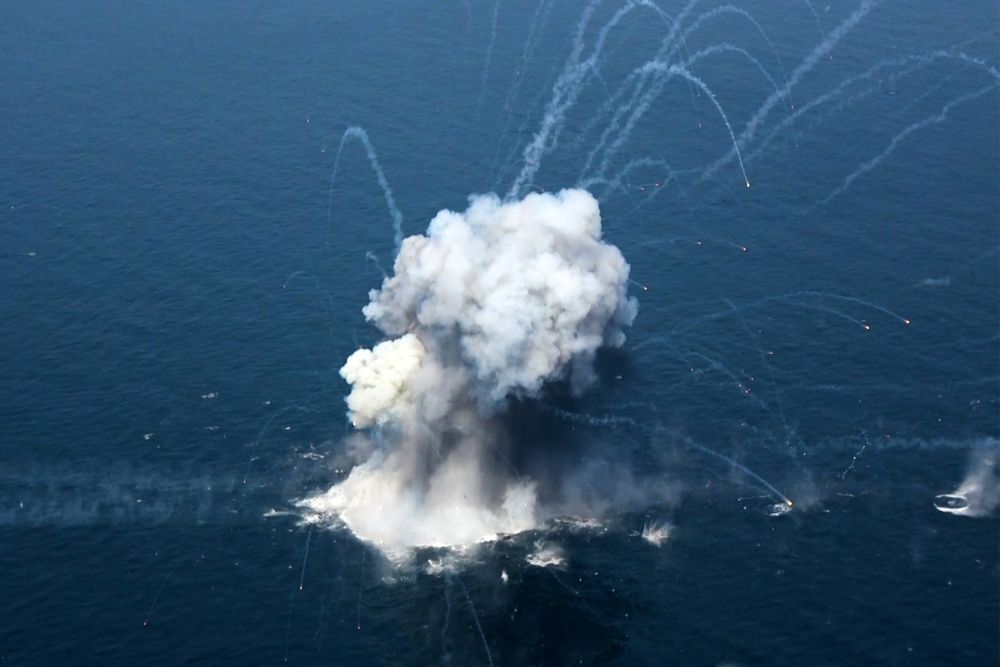

Malaysia's Home Ministry eyes AI, expands drone use in northern waters
Translated from Malay, summarized and contextualized by DistantNews.
At a glance
News
Sources not specified
Context piece
- Malaysia's Home Ministry is exploring the use of artificial intelligence (AI) and expanding drone deployment in northern waters.
- This initiative aims to enhance security and enforcement capabilities, particularly against smuggling activities.
- The plan aligns with the ministry's strategic plans for 2026-2030, focusing on real-time aerial monitoring and improved response times.
Malaysia's Ministry of Home Affairs (KDN) is actively investigating the integration of predictive analytics powered by artificial intelligence (AI) to bolster security and enforcement operations in the northern waters of the Peninsular.
Deputy Home Minister Datuk Seri Dr. Shamsul Anuar Nasarah announced that KDN has also approved a phased expansion of unmanned aerial vehicle (UAV) usage, including drones, for these purposes. This strategic move is in line with KDN's Strategic Plan 2026-2030 and its AI Strategic Plan 2026-2030.
The use of UAVs will act as a capability multiplier for existing ship and boat assets through real-time aerial monitoring, especially in high-risk, large areas with limited surveillance coverage.
The deployment of UAVs is expected to significantly amplify the capabilities of existing maritime assets like ships and boats. Real-time aerial surveillance will be crucial in monitoring vast, high-risk areas where current surveillance coverage is limited. The technology is anticipated to improve early detection of suspicious vessel movements.
Shamsul Anuar made these remarks during a question-and-answer session in the Dewan Rakyat, responding to a query from Datuk Mohd Suhaimi Abdullah (PN-Langkawi) regarding the readiness of security agencies in Langkawi to counter migrant and controlled goods smuggling, and the potential use of drone assets. KDN is also considering the establishment of an Integrated Forward Operating Base in Teluk Ewa, Langkawi, which would house multiple enforcement agencies, including the Malaysian Maritime Enforcement Agency (APMM), the Marine Police Force (PPM), and the General Operations Force (PGA). This integrated approach aims to enhance operational coordination, expedite response times, and strengthen surveillance and enforcement against cross-border crime. The APMM currently utilizes the Sea Surveillance System (SWASLA) for monitoring suspicious activities in Malaysian waters.
This technology will help improve early detection capabilities against suspicious boat movements.
DistantNews Editorial
Originally published by Utusan Malaysia in Malay. Translated, summarized, and contextualized by our editorial team with added local perspective. Read our editorial standards.
More Stories


From Our Blog

What Gets Lost (and Found) When News Is Translated

The Critical Role of Diaspora Media in Global News

What Travellers Should Know About Countries with Restricted Press

A Digital Nomad's Guide to Following Local News

How the Same Story Looks Different in Different Countries
