


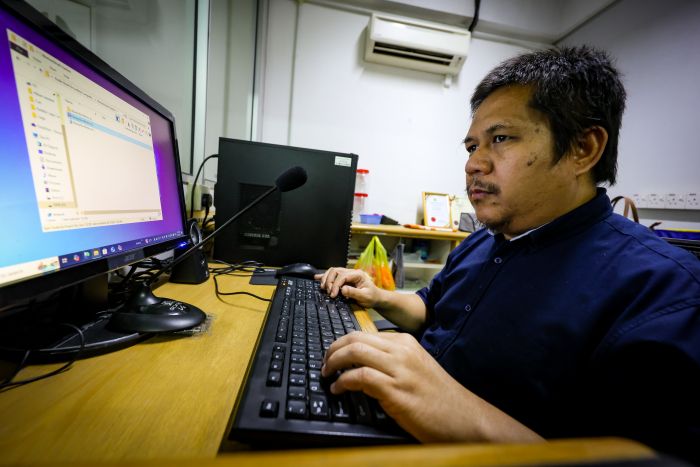
Malaysian Employers Rate OKU Work Ethic Highly, But Hiring Lags
Translated from Malay, summarized and contextualized by DistantNews.
At a glance
In-depth
Documents & data
Context piece
- A Malaysian survey reveals employers highly rate the work ethic of people with disabilities (OKU), with 81% finding their ethics comparable to other workers.
- Despite positive perceptions, only 22% of employers hire OKU, indicating a significant gap between attitude and action.
- The study suggests the challenge lies not in OKU capability, but in the system's readiness for inclusive and meaningful employment.
Despite a strong majority of Malaysian employers recognizing the comparable work ethic and contributions of people with disabilities (OKU), a significant gap persists in their actual hiring practices. A 2025 survey by the Department of Statistics Malaysia (DOSM) found that nearly 81% of employers view OKU employees' work ethic as on par with their non-disabled counterparts, and over 72% acknowledge their positive impact on productivity and innovation. However, these favorable perceptions contrast sharply with the reality that only about 22% of employers in Malaysia hire OKU individuals. This disparity suggests that the primary hurdle is not the capability of OKU individuals, but rather the readiness of the national employment system to embrace them inclusively and meaningfully. The study highlights that positive findings often stem from employers who already have experience hiring OKU, indicating that stigma and outdated assumptions linger among those without direct exposure. Many employers still harbor misconceptions about OKU employees requiring extra attention, being less productive, or increasing operational costs, underscoring that stigma, not evidence, fuels these biases. Furthermore, the research points out that many OKU individuals possess high qualifications, including diplomas and degrees, yet 31.4% are relegated to basic jobs. This raises questions about whether opportunities are truly based on merit or merely serve to fulfill inclusivity quotas. The discourse surrounding OKU employment in Malaysia also heavily focuses on mere recruitment, with insufficient attention paid to career progression, leadership development, and ongoing training. While over 90% of employers support specific guidelines for OKU employment, indicating a willingness for clearer direction, the solution requires more than just incentives. A comprehensive support ecosystem involving educational institutions, training agencies, employers, OKU organizations, and the government is crucial. Strengthening systematic job matching, continuous career guidance, disability-specific training, and post-hiring monitoring are vital steps. Initiatives like Perkeso's MYFutureJobs platform and LINDUNG Kerjaya OKU program are positive moves that need expansion and reinforcement to move beyond basic hiring towards genuine career development for OKU individuals.
DistantNews Editorial
Originally published by Utusan Malaysia in Malay. Translated, summarized, and contextualized by our editorial team with added local perspective. Read our editorial standards.
More Stories



From Our Blog

What Gets Lost (and Found) When News Is Translated

The Critical Role of Diaspora Media in Global News

What Travellers Should Know About Countries with Restricted Press

A Digital Nomad's Guide to Following Local News

How the Same Story Looks Different in Different Countries
