


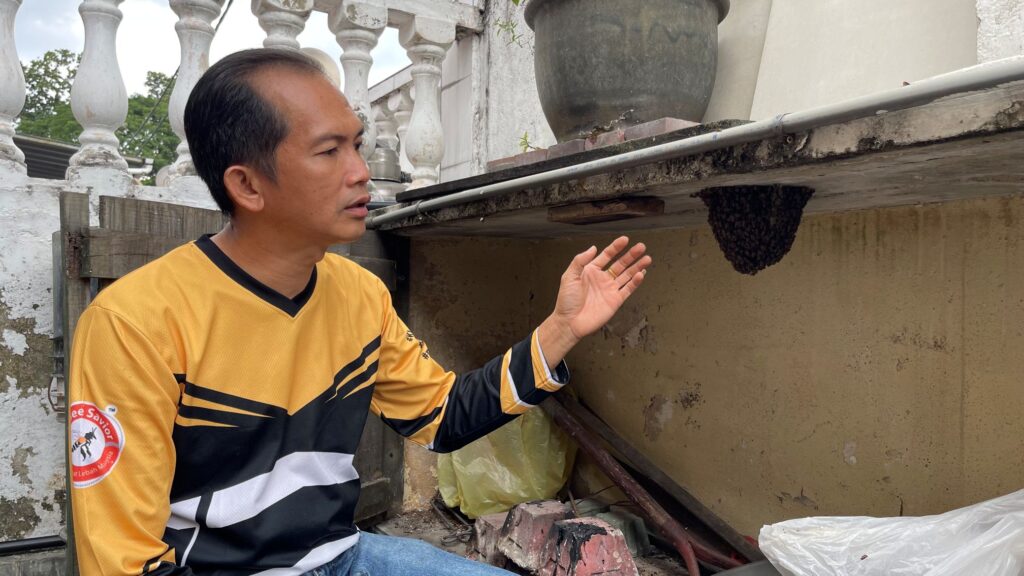
Malaysian volunteers save bees, not destroy nests
Translated from Malay, summarized and contextualized by DistantNews.
At a glance
News
Sources not specified
Context piece
- A Malaysian volunteer group, My Bee Savior Association, rescues and relocates bee nests instead of exterminating them.
- Bees are crucial pollinators, essential for global food chains and biodiversity, with 70% of world food production relying on them.
- The association emphasizes gentle handling and understanding bee behavior to ensure both safety and conservation.
When faced with a bee nest, the immediate instinct for many is to call for help to quickly remove the perceived threat. However, the My Bee Savior Association in Malaysia offers a different approach, focusing on rescuing and relocating these vital insects rather than their destruction.
Dennis Liew, a committee member of the association, explained that emergency services often opt for extermination, but his volunteer group prioritizes saving the bees. Their mission is to move nests from residential areas and public buildings to safer habitats without harming the bees. This work is critical because bees play a fundamental role in the global ecosystem.
If you call the fire department or other emergency agencies, they usually exterminate the bee nest to quickly eliminate the safety threat, whereas there are better ways like what we do. Our job is to save and relocate the bees elsewhere.
Bees are essential pollinators, initiating the food chain by enabling plants to produce fruit, which then feeds herbivores and subsequently carnivores. "Seventy percent of the world's food production relies on this pollination process," Dennis stated. "Without bees, humans and other animals would face food shortages."
Seventy percent of the world's food production relies on this pollination process. Without bees, humans and other animals would face food shortages.
While the work involves the inherent risk of stings, the rescuers have learned to handle the bees with care and gentleness. They believe that bees, like humans, can sense intentions and recognize those who come to help rather than harm. During a rescue operation in Kuala Lumpur, observed by the reporter, the bees initially seemed agitated but became calm as the rescuers worked.
The process involves locating the queen bee and carefully moving her into a small container, which is then placed inside a wooden box. The rest of the colony, including worker bees, guards, and drones, naturally follows their queen, abandoning the original nest. This method effectively transfers the entire colony, transforming a scene of buzzing chaos into a peaceful relocation.
If bees come close, you don't need to wave your hands to shoo them away. Just stay still because if you act aggressively, the bees will perceive you as a threat.
DistantNews Editorial
Originally published by Utusan Malaysia in Malay. Translated, summarized, and contextualized by our editorial team with added local perspective. Read our editorial standards.
More Stories



From Our Blog

What Gets Lost (and Found) When News Is Translated

The Critical Role of Diaspora Media in Global News

What Travellers Should Know About Countries with Restricted Press

A Digital Nomad's Guide to Following Local News

How the Same Story Looks Different in Different Countries
