

/nginx/o/2026/07/30/17817731t1h116e.jpg)
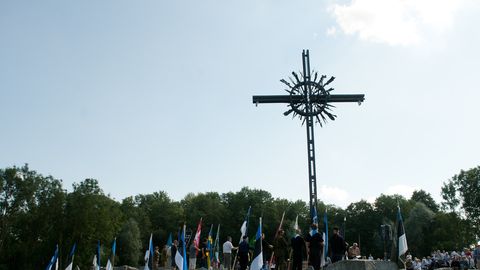
Man faces proceedings for alleged Nazi symbol hat at Estonia memorial
Translated from Estonian, summarized and contextualized by DistantNews.
At a glance
News
Named sources
Under investigation
- Estonian police initiated proceedings against a man at a memorial event for the Battle of Sinimäed for allegedly wearing a hat with Nazi symbols.
- The police stated the event proceeded calmly, but they identified one man wearing a hat they deemed to have Nazi symbolism during routine document checks.
- A lawyer argues the police's action is based on a misinterpretation of the law.
Police in Estonia have launched proceedings against a man who allegedly wore a hat bearing Nazi symbols at a memorial event for the Battle of Sinimäed. The incident occurred during the commemoration of the 82nd anniversary of the fierce World War II battle.
The police-and-border guard board stated that the memorial event dedicated to the 82nd anniversary proceeded generally calmly and without serious incidents.
According to the Police and Border Guard Board, the memorial event largely proceeded peacefully without major incidents. However, during routine document checks, police identified a man wearing a hat that they considered to feature Nazi symbolism. This led to the initiation of administrative offense proceedings against him.
Carri Ginter, a lawyer from the Sorainen law firm, has criticized the police's action, suggesting that the proceedings are based on an incorrect interpretation of the law. The exact nature of the hat's symbolism and the specific legal provisions being invoked were not detailed in the report.
During routine work, the police checked participants' documents and identified one man who, in their opinion, was wearing a hat with Nazi symbolism.
The Battle of Sinimäed, fought in July 1944, involved Estonian units fighting alongside Nazi Germany against the advancing Soviet Red Army. The battle is a sensitive historical event in Estonia, with differing interpretations regarding the motivations and allegiances of those who fought.
according to the assessment of lawyer Carri Ginter from the law firm Sorainen, the proceedings are based on an erroneous interpretation of the law.
DistantNews Editorial
Originally published by Postimees in Estonian. Translated, summarized, and contextualized by our editorial team with added local perspective. Read our editorial standards.
More Stories

/nginx/o/2026/07/30/17817773t1hefdb.jpg)
/nginx/o/2026/07/30/17817430t1h925e.jpg)
From Our Blog

What Gets Lost (and Found) When News Is Translated

The Critical Role of Diaspora Media in Global News

What Travellers Should Know About Countries with Restricted Press

A Digital Nomad's Guide to Following Local News

How the Same Story Looks Different in Different Countries
