


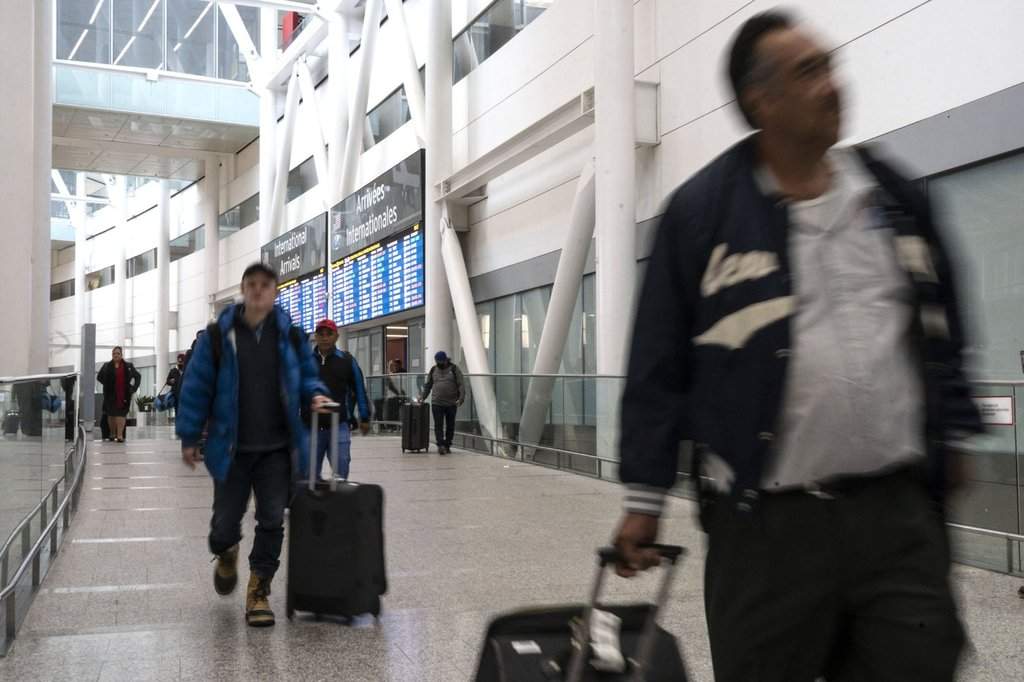
Many Canadians unaware federal travel advisories can void insurance: survey
Summarized and contextualized by DistantNews.
At a glance
News
Named sources
Outcome reported
- A survey commissioned by Global Affairs Canada reveals that most Canadian travelers are unaware that federal travel advisories can invalidate their travel insurance.
- The report found that only 28% of respondents knew that changes in travel alert risk levels could affect insurance validity, potentially leading to denied claims.
- Canadians also showed low awareness of consular services, with many overestimating or underestimating the support embassies can offer in emergencies abroad.
Many Canadians are traveling abroad without fully understanding the implications of government travel advisories on their insurance policies, a new survey commissioned by Global Affairs Canada has found. The research highlights a significant gap in traveler awareness regarding how Ottawa's travel alerts can void insurance coverage, potentially leaving individuals financially exposed.
Awareness of consular services exists, but familiarity is often self-described as low or partial.
The survey, which polled 1,850 Canadians, revealed that only 28% were aware that changes to a destination's risk level in travel alerts could invalidate their insurance. A substantial 56% were unaware of this, and 16% were unsure. This lack of knowledge could lead insurers to deny claims, either partially or entirely, exposing travelers to unintended financial and safety risks.
This gap is significant, as misunderstanding insurance implications may expose travellers to unintended financial and safety risks.
Beyond insurance, the report also pointed to a general lack of familiarity with consular services. The survey indicated that Canadians often have misconceptions about the extent of government assistance available. While some overestimate the mandate of embassies, believing they can intervene in foreign legal systems beyond their capacity, others underestimate the support, failing to realize that certain assistance channels or financial mechanisms exist.
The data suggests that Canadians often either overestimate the mandate (e.g., assuming intervention in foreign legal systems beyond what is possible), or underestimate support (e.g., not realizing assistance channels or financial mechanisms exist).
For instance, only a third of respondents knew that Ottawa can offer financial aid in exceptional emergencies, such as a loan for evacuation from a dangerous area. Similarly, many were unsure about whether the government covers burial costs or the transportation of human remains back to Canada, with just 39% correctly stating this is not a service offered. The report suggests these inaccurate assumptions, whether inflated or diminished, can lead to frustration, delayed contact, or misplaced reliance on unavailable support during crisis situations.
In crisis situations, inaccurate assumptions (whether inflated or diminished), may lead to frustration, delayed contact, or inappropriate reliance on unavailable forms of assistance.
DistantNews Editorial
Originally published by Global News. Summarized and contextualized by our editorial team with added local perspective. Read our editorial standards.
More Stories


From Our Blog

What Gets Lost (and Found) When News Is Translated

The Critical Role of Diaspora Media in Global News

What Travellers Should Know About Countries with Restricted Press

A Digital Nomad's Guide to Following Local News

How the Same Story Looks Different in Different Countries
