

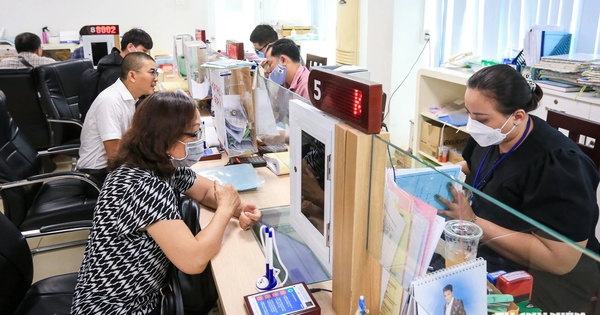

Many Prime Ministerial Powers to be Delegated to Ho Chi Minh City Chairman
Translated from Vietnamese and summarized by DistantNews. Read the original for the full story.
At a glance
News
Named sources
Context piece
- Ho Chi Minh City is developing a draft law for a special urban administrative framework, aiming to grant more autonomy to city leaders.
- The proposed law seeks to decentralize powers from the central government, empowering the City People's Committee and its Chairman.
- This initiative aims to address existing limitations in special pilot mechanisms and create a stable, long-term legal framework for the city's development.
Ho Chi Minh City is embarking on a significant legislative endeavor with the drafting of a special urban law, a move poised to grant unprecedented autonomy to its leadership. This initiative stems from the recognition that while past pilot programs have yielded important results, they have been constrained by time limits and a lack of legal synchronization, hindering the city's potential for robust development. The proposed law aims to transition these special mechanisms into a superior and enduring legal framework, essential for the city's future breakthroughs.
The special pilot mechanisms are limited in time, sometimes lack synchronization in the legal system, and have not yet created a stable, long-term institutional framework for the city's development.
The core of this new legislation, as outlined by Ms. Nguyễn Thị Hồng Hạnh, Director of the Department of Justice, involves a maximal decentralization of authority. Drawing inspiration from the Law on the Capital, the draft proposes a tiered system where powers are devolved from the National Assembly to the City People's Council, from the Government to the City People's Committee, and crucially, from the Prime Minister to the Chairman of the City People's Committee. This strategic redistribution of power is designed to streamline decision-making and enhance the city's capacity to respond dynamically to its unique challenges and opportunities.
The draft law on the special urban area is a law on decentralization, devolution of power to remove institutional bottlenecks for Ho Chi Minh City.
From a local perspective in Ho Chi Minh City, this law represents a critical opportunity to overcome institutional bottlenecks. As Dr. Trần Du Lịch, former Deputy Head of the Ho Chi Minh City Delegation to the National Assembly, emphasizes, this is a law about decentralization and devolution, aimed at dismantling the 'begging-and-giving' (xin-cho) mechanism, particularly concerning the budget. The current legal landscape, which often requires constant seeking of approval from central authorities, stifles innovation and efficiency. By empowering local leaders with greater decision-making power, especially in areas outside national security, defense, foreign affairs, ethnicity, and religion, the city hopes to unlock its full potential and solidify its position as a dynamic economic hub. This move reflects a national trend towards greater administrative decentralization, but Ho Chi Minh City's specific needs and ambitions make this a particularly pivotal development.
The draft law on the special urban area proposes nearly 300 authorities, of which the Ho Chi Minh City People's Council has more than 140 authorities, the Ho Chi Minh City People's Committee has more than 130 authorities, and the Chairman of the Ho Chi Minh City People's Committee has more than 20 authorities.
About this summary
Originally published by Thanh Niên in Vietnamese. Translated, summarized, and contextualized automatically by DistantNews, with a note on how the source frames the story. Not individually reviewed before publishing. How this works.
More Stories
From Our Blog

News in Translation: What Gets Lost, and How We Keep the Framing

Diaspora Media: How Communities Abroad Follow Home

Traveling Where the Press Is Not Free: How to Read the News There

The Digital Nomad's Guide to Local News

The Same Story, Different Countries: How Coverage Changes at the Border
