

Marine crisis alert: Pelicans flock to Huanchaco pier due to food scarcity
Translated from Spanish, summarized and contextualized by DistantNews.
At a glance
News
Named sources
Context piece
- Pelicans have been observed gathering unusually at the Huanchaco pier in Trujillo, Peru, in search of food.
- Experts attribute this phenomenon to rising sea temperatures disrupting marine ecosystems and forcing seabirds to migrate.
- Biologists criticize authorities for a lack of concrete conservation strategies, warning that the hunger and migration of these birds could lead to local extinctions.
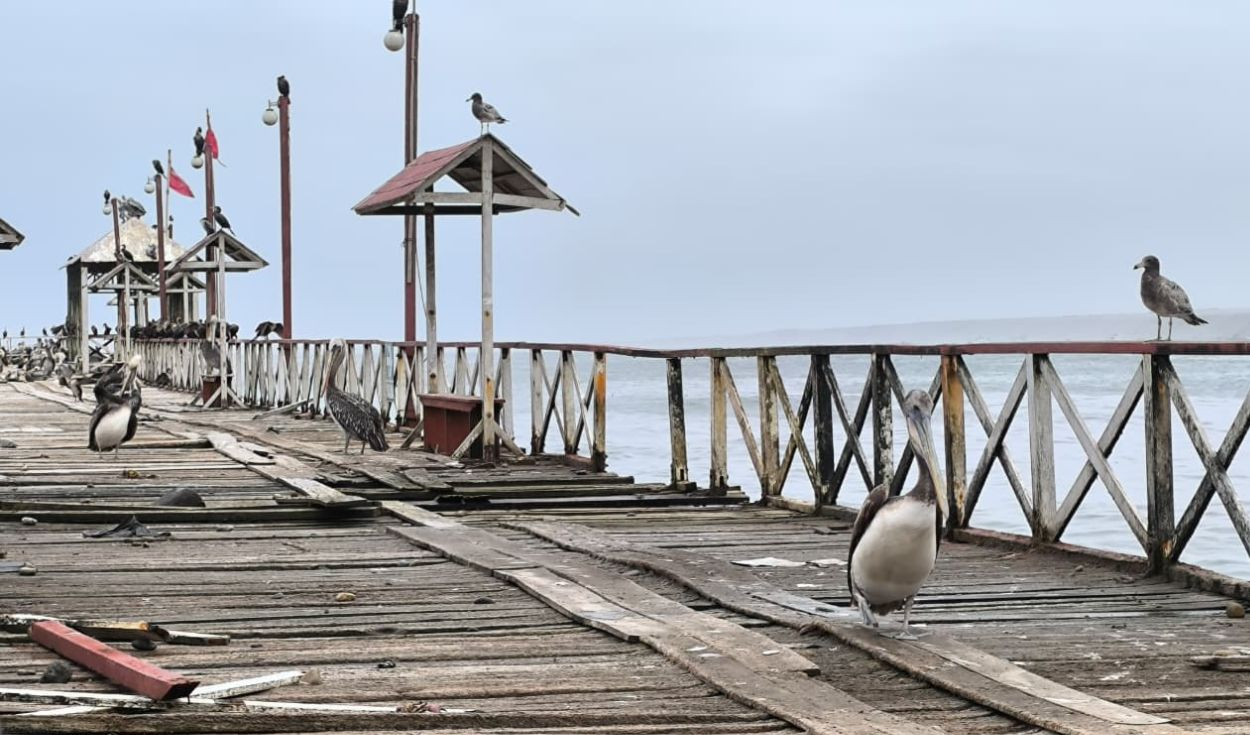
Citizens and fishermen in Huanchaco, Trujillo, Peru, have reported an unusual increase in pelicans congregating at the local pier, desperately seeking food. Experts explain this phenomenon as a direct consequence of rising sea temperatures, which are disrupting marine ecosystems and forcing seabirds into migration, sometimes leading to their deaths.
We are seeing the consequences of what we had anticipated: the mass death of marine birds and mammals, as well as the migration of many species in search of food. This is a product of the warming sea; if the sea is hot, there will be no food for these birds, like the anchoveta.
Biologist Carlos Bocanegra explained that the warming sea is depleting the anchoveta, a primary food source for many seabirds. This scarcity compels species like boobies, guanayes, and pelicans to approach fishing piers and terminals, scavenging for discarded fish remains in a desperate bid for survival. Bocanegra warned that this situation could lead to the local extinction of these vital guano-producing birds.
Bocanegra also voiced strong criticism towards the national authorities responsible for wildlife conservation, specifically the National Forest and Wildlife Service (Serfor) and the National Service of Natural Protected Areas (Sernanp). He stated that these agencies are failing to implement effective strategies to protect vulnerable marine species like pelicans. "There is no strategy to conserve beings like pelicans," he commented, adding that the current trend of hunger, death, and migration threatens their existence.
There is no strategy to conserve beings like the pelicans. The hunger will continue, as will the death and migration of the birds. We could be left without boobies, without guanay, and without pelicans, which are guano birds.
He urged Serfor and Sernanp to intervene by providing food for the young birds and implementing measures to facilitate their reproduction. Without urgent action, Bocanegra fears that the populations of boobies, guanayes, and pelicans could be decimated in the coming years due to the adverse conditions and lack of food.
Serfor is the institution responsible for caring for wildlife, but they are not doing anything.
DistantNews Editorial
Originally published by La República in Spanish. Translated, summarized, and contextualized by our editorial team with added local perspective. Read our editorial standards.
More Stories

From Our Blog

What Gets Lost (and Found) When News Is Translated

The Critical Role of Diaspora Media in Global News

What Travellers Should Know About Countries with Restricted Press

A Digital Nomad's Guide to Following Local News

How the Same Story Looks Different in Different Countries
