


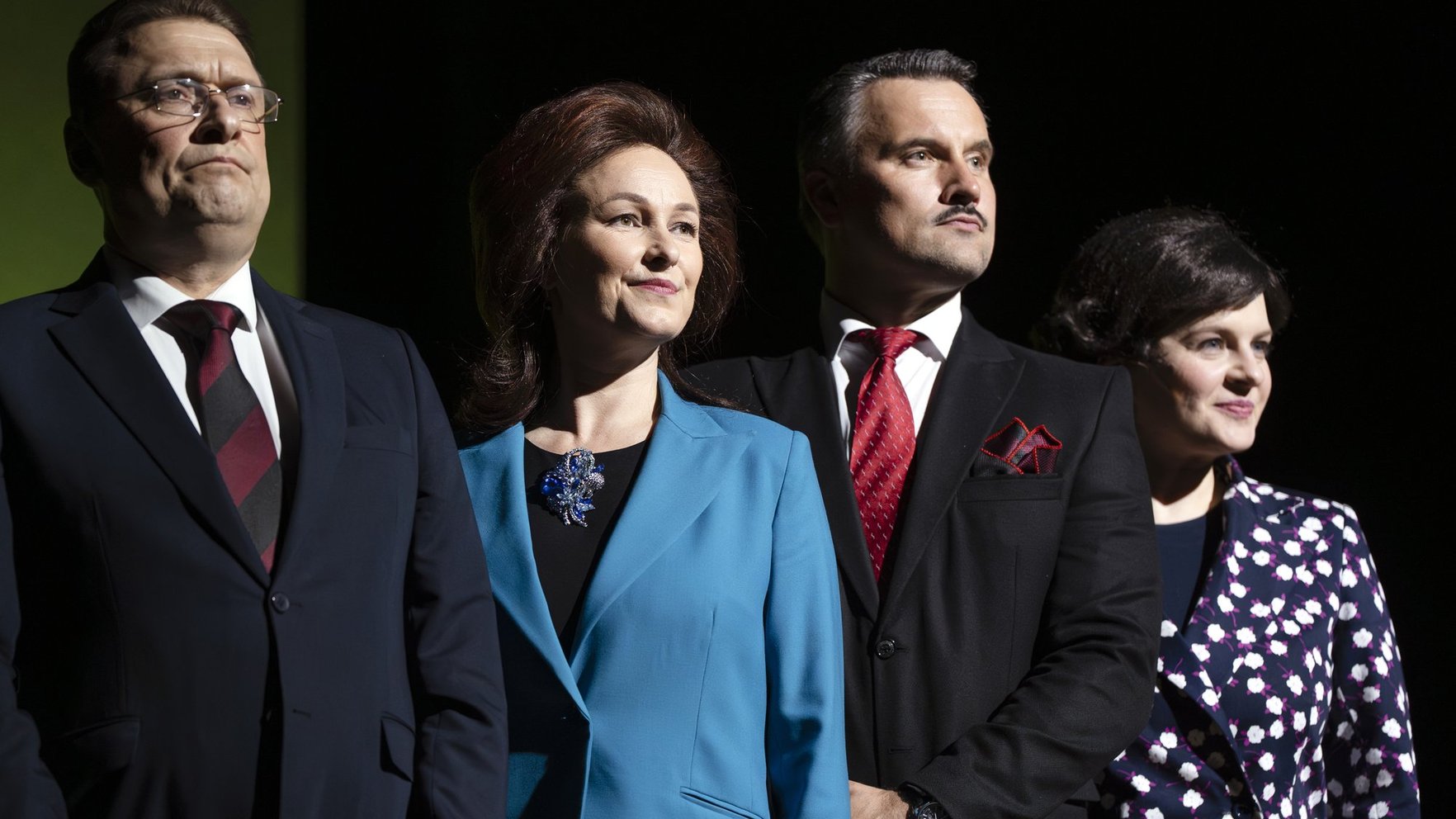
Māris Zanders: 'Elite' Reflects a Specific Mindset, Not a Call for Self-Criticism
Translated from Latvian, summarized and contextualized by DistantNews.
At a glance
News
Named sources
Context piece
- The article discusses the play "Elite" at Dailes Theatre and reactions to its premiere.
- Some social media users expressed surprise at the comfortable demeanor of characters perceived as 'elite' attendees.
- The author argues that "Elite" represents a specific worldview, suggesting that self-reflection and self-criticism are not inherent to it.
A recent premiere of the play "Elite" at Dailes Theatre has sparked debate, particularly concerning the audience's reaction and the play's thematic implications. Following the opening night, social media buzzed with surprise and even indignation from some quarters regarding the apparent ease with which characters, identified as part of the 'elite,' seemed to enjoy the performance. These reactions stem from a perception that these individuals are complicit in the gradual degradation of Latvia's political environment. Māris Zanders, writing for Delfi Latvia, acknowledges these emotions but questions the basis for such surprise. He posits that "Elite" embodies a distinct model of perceiving the world, one where introspection and self-critique are not naturally expected or present. Zanders suggests that viewing the play through this lens clarifies why such characters might appear comfortable, as their worldview may not prioritize self-examination.
Elite is a specific model of perceiving the world, in which it is completely unnecessary to look for self-reflection and self-criticism.
DistantNews Editorial
Originally published by Delfi Latvia in Latvian. Translated, summarized, and contextualized by our editorial team with added local perspective. Read our editorial standards.
More Stories



From Our Blog

What Gets Lost (and Found) When News Is Translated

The Critical Role of Diaspora Media in Global News

What Travellers Should Know About Countries with Restricted Press

A Digital Nomad's Guide to Following Local News

How the Same Story Looks Different in Different Countries
