


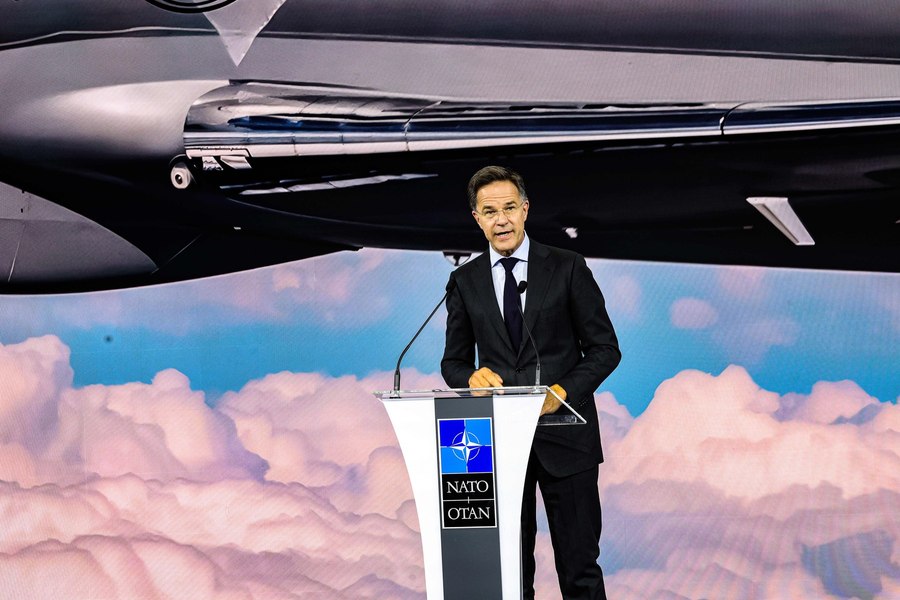
Mark Rutte Promotes 'Made in NATO' Arms Amid EU's 'Buy European' Strategy
Translated from Romanian, summarized and contextualized by DistantNews.
At a glance
News
Named sources
Context piece
- NATO Secretary General Mark Rutte announced new defense contracts worth over $54 billion, promoting "Made in NATO" capabilities and transatlantic industrial cooperation.
- This initiative may conflict with the EU's strategy to prioritize European defense manufacturers and its SAFE program, which limits non-EU components.
- European nations are increasing military spending amid rising tensions with Russia and U.S. pressure for greater European defense investment.
NATO Secretary General Mark Rutte is championing a new era of transatlantic defense cooperation, announcing over $54 billion in new contracts and advocating for "Made in NATO" capabilities. This push aims to strengthen industrial ties between North America and Europe, fostering joint innovation and the development of next-generation military assets.
Rutte's initiative, however, risks clashing with the European Union's distinct strategy. The EU, through programs like SAFE (worth €150 billion), prioritizes bolstering its own defense industry, limiting non-EU components in funded armament systems to 35%. Additionally, a €90 billion European support program for Ukraine restricts the use of funds for military equipment produced outside the Union.
The world will see industries from North America and Europe working together, innovating and developing next-generation military capabilities. These are truly 'Made in NATO' capabilities.
These diverging approaches emerge as European nations significantly increase their defense expenditures. This surge is driven by heightened security concerns related to Russia and pressure from the U.S. for Europe to assume greater responsibility for its own defense. NATO data indicates a substantial rise in European and Canadian defense investments, with further increases projected for 2026, as members strive to meet the goal of allocating 5% of GDP to defense by 2035.
NATO officials, while acknowledging the EU's efforts, urge for a more flexible approach. Deputy Secretary General for Industry, Innovation, and Armaments, Tarja Jaakkola, stressed the importance of ensuring armed forces have access to all necessary capabilities for common defense. The alliance argues that current defense production capacity is insufficient to meet growing demand, necessitating contributions from both European and North American manufacturers.
It is important to ensure that the armed forces benefit from all the capabilities they need for common defense.
DistantNews Editorial
Originally published by Adevărul in Romanian. Translated, summarized, and contextualized by our editorial team with added local perspective. Read our editorial standards.
More Stories


From Our Blog

What Gets Lost (and Found) When News Is Translated

The Critical Role of Diaspora Media in Global News

What Travellers Should Know About Countries with Restricted Press

A Digital Nomad's Guide to Following Local News

How the Same Story Looks Different in Different Countries
