


Market Fatigue: AI Investment Fears Sink Chip Stocks on Tokyo Exchange
Translated from Polish, summarized and contextualized by DistantNews.
At a glance
News
Sources not specified
Context piece
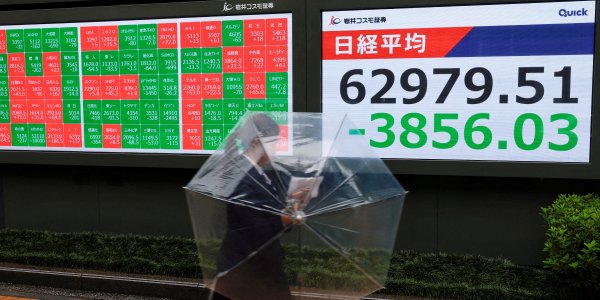
- The Tokyo Stock Exchange experienced a significant sell-off on Friday, with the Nikkei 225 index dropping over 4 percent, heavily impacting technology and semiconductor stocks.
- Investors showed concern over massive capital expenditures for AI development, even as companies reported strong quarterly earnings and ambitious growth plans.
- Key players like SoftBank, Tokyo Electron, Kioxia, and TSMC saw substantial stock declines, reflecting market fatigue with high investment demands in the tech sector.
The Japanese stock market faced a sharp downturn Friday, with the Nikkei 225 index plummeting over 4 percent. Technology and semiconductor manufacturers bore the brunt of the sell-off, despite many reporting robust quarterly results and outlining aggressive expansion strategies, particularly in artificial intelligence.
Investors appear increasingly wary of the enormous capital investments required for AI advancement. This sentiment led to significant drops in major tech firms. SoftBank, a prominent investor in startups, saw its shares fall by more than 9 percent. Tokyo Electron, a key supplier of chip manufacturing equipment, also experienced a roughly 9 percent decline.
Memory chip maker Kioxia suffered a dramatic fall of over 14 percent after a U.S. jury ordered the company to pay $229 million for patent infringement. This adds to recent struggles, as Kioxia's market capitalization has halved in the past month. Even Taiwan Semiconductor Manufacturing Co. (TSMC), a global leader in chip production, saw its shares drop nearly 4 percent in Taipei, despite reporting a strong quarterly profit increase and raising its capital expenditure forecast for the year to $60-64 billion.
The market's reaction to TSMC's increased spending, and similar responses to Samsung Electronics' earlier earnings report, highlight a growing investor fatigue with the relentless demand for high capital outlays in the technology sector. This suggests that even record financial performance may not be enough to shield these companies from market anxieties driven by the sheer scale of investment needed for future growth, especially in AI.
DistantNews Editorial
Originally published by Rzeczpospolita in Polish. Translated, summarized, and contextualized by our editorial team with added local perspective. Read our editorial standards.
More Stories



From Our Blog

What Gets Lost (and Found) When News Is Translated

The Critical Role of Diaspora Media in Global News

What Travellers Should Know About Countries with Restricted Press

A Digital Nomad's Guide to Following Local News

How the Same Story Looks Different in Different Countries
