


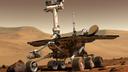
Mars Oxygen Experiment Proves Key Resource Can Be Produced On-Site
Translated from Croatian, summarized and contextualized by DistantNews.
At a glance
News
Named sources
Outcome reported
- A key experiment on Mars, the MOXIE device on the Perseverance rover, successfully demonstrated the ability to produce oxygen from the Martian atmosphere.
- MOXIE generated 122 grams of oxygen during its operation, with a peak production rate of 12 grams per hour at over 98% purity.
- This proof-of-concept is crucial for future missions, as producing resources like oxygen on Mars could significantly reduce the amount that needs to be transported from Earth.
A small but vital experiment aboard NASA's Perseverance rover has proven that producing oxygen directly from the thin Martian atmosphere is possible. The instrument, known as MOXIE (Mars Oxygen In-Situ Resource Utilization Experiment), was not designed to supply a future base or fuel a return rocket, but rather to serve as a critical proof-of-concept for future space exploration.
MOXIE's task was to extract oxygen from Mars' carbon dioxide-rich atmosphere. Over the course of the experiment, from Perseverance's landing in 2021 until the experiment's conclusion, MOXIE successfully produced a total of 122 grams of oxygen. In its most productive phase, the device generated oxygen at a rate of 12 grams per hour, achieving a purity of at least 98 percent.
While the quantity produced is insufficient for a human outpost, the success of MOXIE is a significant milestone. It demonstrates that essential resources can be generated on-site, a capability that could dramatically reduce the logistical challenges and costs associated with long-duration human missions to Mars. The ability to produce oxygen locally is a fundamental step towards making human settlements on the Red Planet feasible.
The implications of MOXIE's success extend beyond oxygen production. It validates the concept of in-situ resource utilization (ISRU), a cornerstone of sustainable space exploration. By leveraging local Martian resources, future missions can become more self-sufficient, carrying less mass from Earth and potentially enabling more ambitious exploration goals. This technological leap paves the way for future endeavors that rely on Martian resources for survival and operations.
DistantNews Editorial
Originally published by Večernji List in Croatian. Translated, summarized, and contextualized by our editorial team with added local perspective. Read our editorial standards.
More Stories



From Our Blog

What Gets Lost (and Found) When News Is Translated

The Critical Role of Diaspora Media in Global News

What Travellers Should Know About Countries with Restricted Press

A Digital Nomad's Guide to Following Local News

How the Same Story Looks Different in Different Countries
