


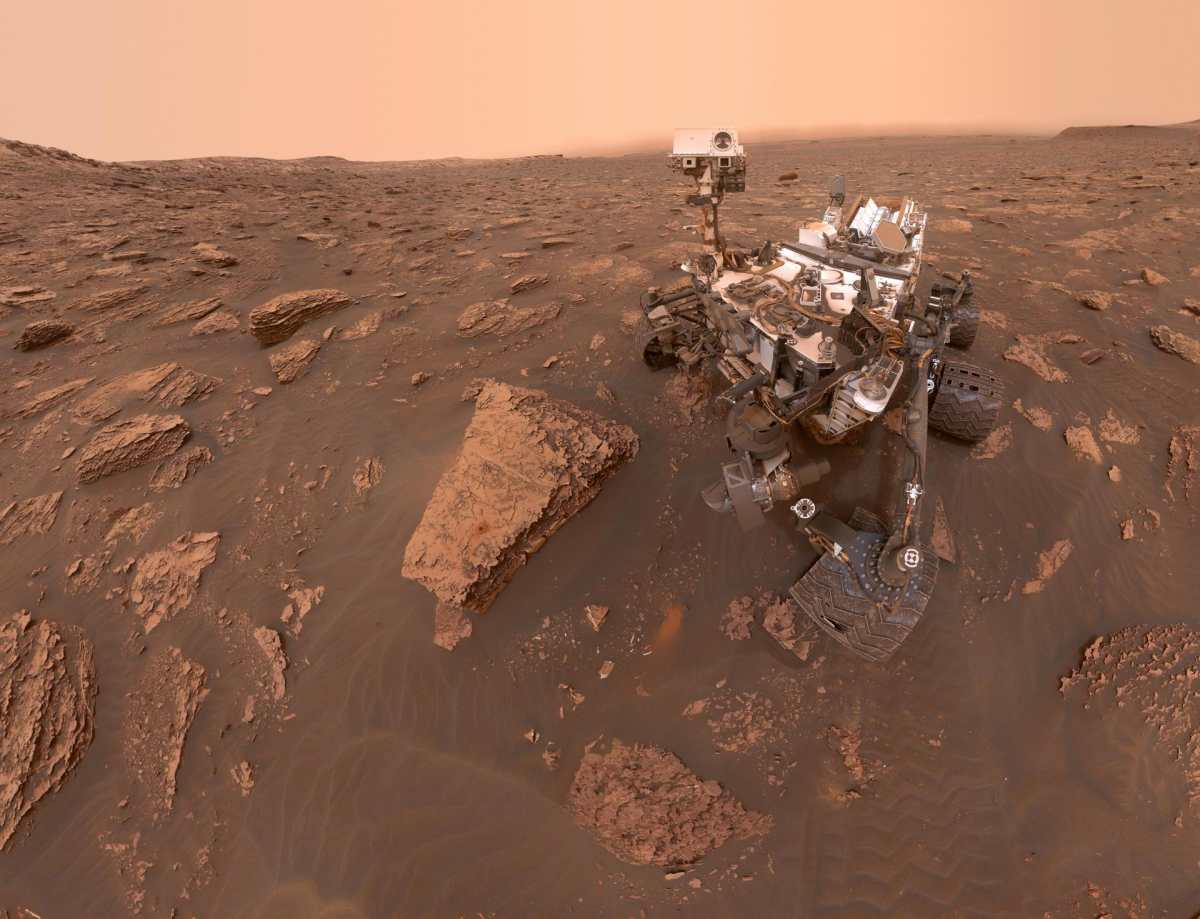
Mars Rover Discovery Boosts Search for Signs of Life
Translated from Spanish, summarized and contextualized by DistantNews.
TLDR
- NASA's Curiosity rover detected organic molecules preserved on Mars for 3.5 billion years, a significant finding in the search for past microbial life.
- The detected molecules, including one with nitrogen similar to DNA precursors, were found in clay-rich areas of Gale Crater, indicating past water presence.
- While the experiment cannot distinguish between biological and geological origins, the discovery is promising for future missions seeking signs of life on Mars.
The Perseverance rover's findings on Mars represent a monumental leap in humanity's quest to understand our place in the universe. As reported by Prensa Libre, the detection of organic molecules, potentially preserved for billions of years, fuels the ongoing search for evidence of past microbial life on the Red Planet.
Creemos que estamos ante materia orgánica que se ha conservado en Marte durante 3,500 millones de años
This discovery, detailed in Nature Communications, underscores the importance of the Curiosity rover's mission, which landed in Gale Crater in 2012 with the primary objective of assessing Mars's past habitability. The clay-rich region of Glen Torridon, where the experiment was conducted, has long been a focal point due to its potential to preserve organic compounds.
The identification of a nitrogen-containing molecule, structurally similar to DNA precursors, is particularly groundbreaking. While scientists caution that these organics could stem from geological processes or meteorites, the mere presence of such complex molecules is a powerful indicator. This finding resonates deeply within our region, where the exploration of space is often viewed not just as a scientific endeavor, but as a testament to human ingenuity and our inherent drive to explore the unknown.
La lluvia química procedente de restos de meteoritos que tuvo Marte es la misma que la que experimentó la Tierra y probablemente proporcionó los componentes básicos para la vida tal y como la conocemos en nuestro planeta
Unlike some Western media that might focus solely on the technical aspects, here in Guatemala, this news sparks a sense of wonder and possibility. It ignures the imagination about life beyond Earth, a topic that has long captivated our cultures. The ongoing exploration of Mars, driven by international collaboration but with a distinct sense of shared human curiosity, continues to inspire us.
Ya sabemos que hay compuestos orgánicos complejos conservados en la subsuperficie poco profunda de Marte, y eso es muy prometedor para la conservación de moléculas químicas que podrían ser indicativos de vida
DistantNews Editorial
Originally published by Prensa Libre in Spanish. Translated, summarized, and contextualized by our editorial team with added local perspective. Read our editorial standards.
More Stories



From Our Blog

What Gets Lost (and Found) When News Is Translated

The Critical Role of Diaspora Media in Global News

What Travellers Should Know About Countries with Restricted Press

A Digital Nomad's Guide to Following Local News

How the Same Story Looks Different in Different Countries
