


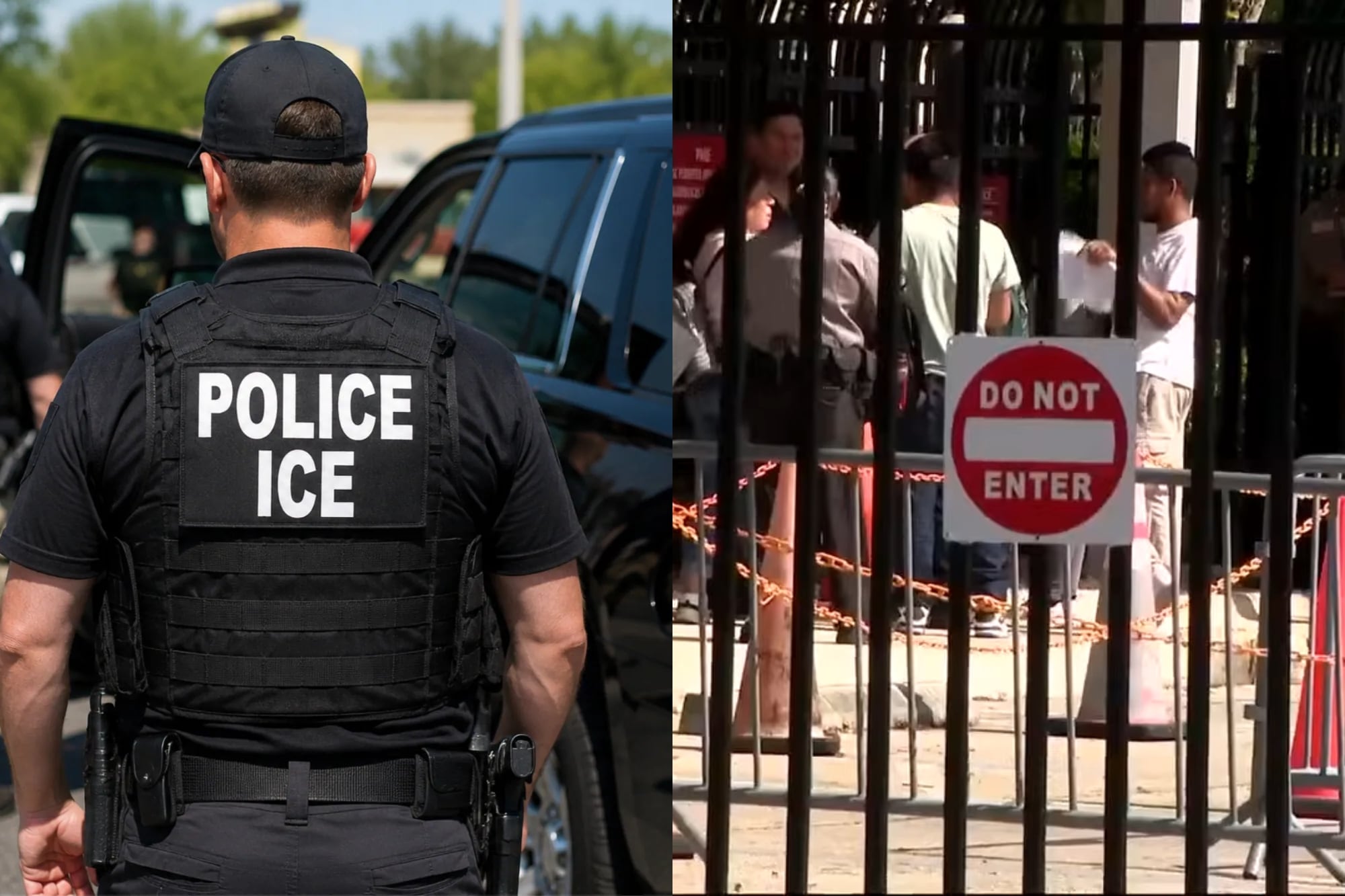
Mass deportations: ICE's Miramar office faces scrutiny over detention conditions
Translated from Spanish, summarized and contextualized by DistantNews.
At a glance
News
Named sources
Under investigation
- An inspection of the U.S. Immigration and Customs Enforcement (ICE) office in Miramar, Florida, revealed severe overcrowding and inadequate basic conditions.
- Congresswoman Debbie Wasserman Schultz reported that approximately 150 individuals were detained in spaces designed for fewer people, lacking basic amenities like shade, water, and proper sanitation.
- Detainees were reportedly forced to sleep on concrete floors with only thermal blankets, lacking privacy and adequate access to food and hygiene facilities.
A recent inspection of the U.S. Immigration and Customs Enforcement (ICE) office in Miramar, north of Miami, has brought to light alarming conditions of overcrowding and a severe lack of basic necessities. Congresswoman Debbie Wasserman Schultz conducted an unannounced visit, revealing that around 150 individuals were being held in spaces with limited capacity, often for periods extending up to 72 hours or more. These conditions, she stated, were unsuitable even for one's worst enemy.
Schultz detailed her observations, noting that detainees were confined to rooms with limited space, described as being "packed like sardines." In one men's holding area, approximately 70 people were reportedly crammed into a small space, while a women's area held about 40 detainees. The congresswoman reported that many individuals were forced to sleep directly on the concrete floor, provided only with thermal blankets. Furthermore, the sanitary facilities were located within the same rooms, offering no privacy, and some detainees were forced to stand for extended periods due to the lack of space.
The inspection also highlighted issues with daily provisions, including a single bottle of water per day, a meager 214-gram meal, and the possibility of showering only every two days. The facility reportedly lacks designated areas for meetings with legal counsel or family visits. These findings have intensified scrutiny over the operation of the ICE office in South Florida, with Schultz vowing to push for greater oversight and accountability for these facilities and questioning the use of federal resources for such practices.
DistantNews Editorial
Originally published by La Nación in Spanish. Translated, summarized, and contextualized by our editorial team with added local perspective. Read our editorial standards.
More Stories



From Our Blog

What Gets Lost (and Found) When News Is Translated

The Critical Role of Diaspora Media in Global News

What Travellers Should Know About Countries with Restricted Press

A Digital Nomad's Guide to Following Local News

How the Same Story Looks Different in Different Countries
