


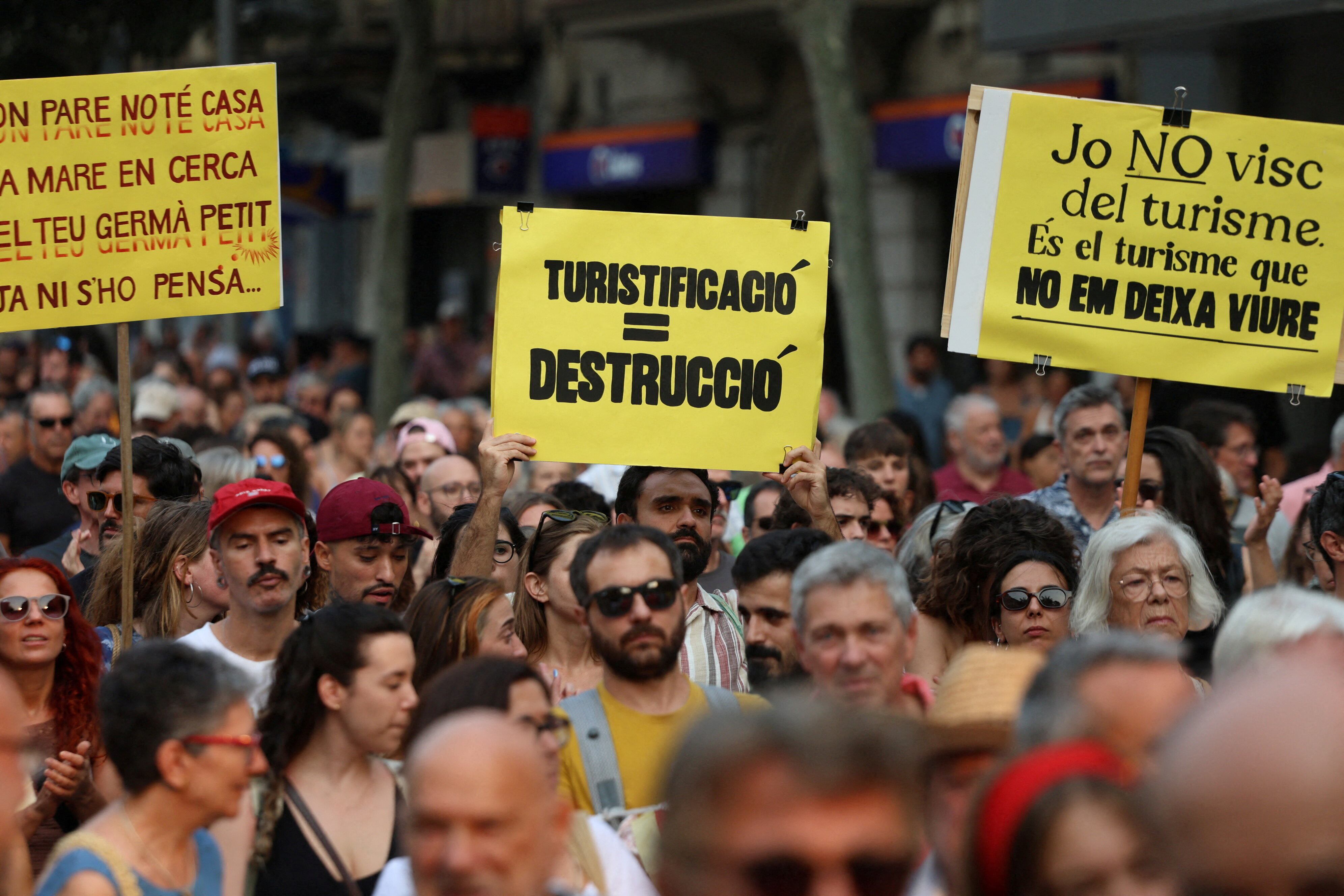
Massive Protest in Palma Against Tourist Overcrowding: 'Everything is Overexploited'
Translated from Spanish, summarized and contextualized by DistantNews.
At a glance
News
Named sources
Context piece
- Thousands protested in Palma, Mallorca, against overtourism for the third consecutive year, with 25,000 participants according to police.
- Demonstrators cited issues like infrastructure saturation, reduced quality of life for residents, gentrification, and the housing crisis.
- The protest highlighted tensions between tourism and the daily lives of residents, with calls for less tourism and more focus on local life.
Palma, Mallorca, saw a massive demonstration on Sunday as thousands took to the streets to protest against the overwhelming impact of mass tourism. This marks the third consecutive year of such protests, reflecting a growing frustration among residents of the Balearic Islands. Police estimated around 25,000 people participated in the march, organized by the platform "Menys Turisme, Més Vida" (Less Tourism, More Life), which comprises 60 social, trade union, and environmental groups.
The core of the protest is the denunciation of a "saturation" of infrastructure and services, which demonstrably worsens the quality of life for residents. The march, supported by approximately 135 entities, carried the banner "Mallorca al límit" (Mallorca at its limit). This year's event was not without controversy, including the publication of a manual by organizers suggesting actions against "touristification," such as graffiti and blocking locks on tourist businesses, and the arrest of two activists accused of vandalism.
I decided to come out because of the emergency we have when buying a house, the overpopulation, and how everything is going up in price.
This demonstration follows a similar large-scale protest in July 2024, which drew over 20,000 people. Two years later, the demands remain largely unchanged: a halt to gentrification and the displacement of long-term residents from their neighborhoods, a reduction in water consumption, and the protection of natural landscapes. Many attendees expressed concerns about the escalating cost of living and the difficulty young Mallorcans face in accessing housing.
The initiative aims to denounce the 'tourism monoculture' in the year prior to the regional elections and in a summer where all tourist records are likely to be broken again.
Daniel Camargo, a 23-year-old participant, stated his reason for joining was the "emergency we have when buying a house, the overpopulation, and how everything is going up in price." He highlighted the inability of young locals to compete with Northern Europeans for housing. The march, characterized by a festive atmosphere, traversed the city center, with numerous signs bearing slogans like "Mallorca is not for sale," "I don't recognize my land," and "Mallorca is not for rent," underscoring the severe housing crisis.
Dani Comas, spokesperson for the organizing platform, emphasized that the initiative aims to highlight the island's "tourism monoculture" in the year leading up to regional elections. He predicted that the island would be "totally collapsed" by August 12 due to record-breaking tourist numbers. The protest underscores a deep-seated conflict between the economic benefits of tourism and the sustainability of the island's environment and the well-being of its residents.
The island will be totally collapsed on August 12.
DistantNews Editorial
Originally published by El País in Spanish. Translated, summarized, and contextualized by our editorial team with added local perspective. Read our editorial standards.
More Stories


From Our Blog

What Gets Lost (and Found) When News Is Translated

The Critical Role of Diaspora Media in Global News

What Travellers Should Know About Countries with Restricted Press

A Digital Nomad's Guide to Following Local News

How the Same Story Looks Different in Different Countries
