

Mecklenburg-Western Pomerania election: What you need to know
Translated from German and summarized by DistantNews. Read the original for the full story.
At a glance
Explainer
Sources not specified
Context piece
- Manuela Schwesig is seeking another term for the SPD, which is campaigning on the economy, families and democracy.
- The AfD, led by candidates including Leif-Erik Holm and Enrico Schult, is proposing sweeping changes focused on migration controls, security and energy policy.
- The election could make the AfD the strongest party and raise questions about coalition options and the political firewall against cooperation with it.
Manuela Schwesig is running again for the SPD as Mecklenburg-Western Pomerania heads into a closely watched state election. The campaign is already in full swing, with the parties presenting sharply different priorities and governing choices.
The SPD has placed the economy, families and democracy at the centre of its programme. It wants to use the two billion euros allocated to the state from a federal special fund for infrastructure. The party also promises investment in education and social security, continued free childcare and one billion euros for schools.
Its democratic agenda includes a qualified public consultation process intended to give citizens more influence. The SPD also plans major investment in fire services and presents voluntary work and social cohesion as further priorities. Schwesig, 52, has led the state government and the SPD in Mecklenburg-Western Pomerania since 2017. She previously served as federal minister for family affairs.
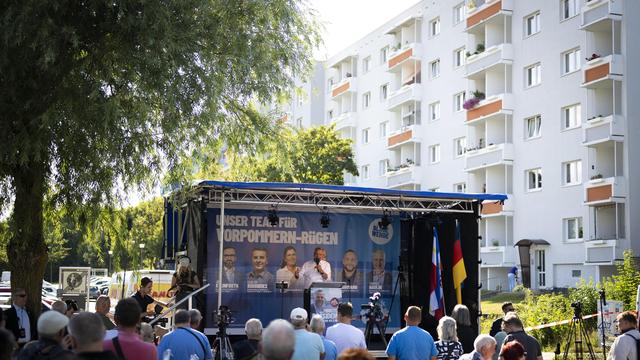
The AfD is putting forward what it calls a “blue turning point” across the economy, family policy, education and security. Leif-Erik Holm, a 56-year-old Bundestag member and the party’s economic policy spokesman, is standing directly against Schwesig in her constituency. Enrico Schult, who entered the state parliament in 2021, holds first place on the AfD’s state list.
The AfD programme calls for tighter limits on migration, including a possible admission freeze and the “remigration” of people from Syria living in the state. It proposes state-run immigration detention facilities, a return police force and a task force targeting foreign offenders. Asylum seekers would receive only benefits in kind, under what the party calls the “bed, bread, soap principle.” The party also opposes inclusion, wants preparatory classes for pupils it considers insufficiently proficient in German, and seeks to end fee-free childcare.
Further proposals include looser weapons rules and reduced documentation requirements for police officers. The AfD wants to return to nuclear power, repair the Nord Stream pipeline to resume Russian gas imports, abolish the state media treaty and end NDR reporting in Mecklenburg-Western Pomerania. The prospect of the AfD becoming the strongest party leaves coalition options and the firewall against cooperation with it as central questions.
About this summary
Originally published by Die Zeit in German. Translated, summarized, and contextualized automatically by DistantNews, with a note on how the source frames the story. Not individually reviewed before publishing. How this works.
More Stories

From Our Blog

What Gets Lost (and Found) When News Is Translated

How the Same Story Looks Different in Different Countries

The Critical Role of Diaspora Media in Global News

What Travellers Should Know About Countries with Restricted Press

A Digital Nomad's Guide to Following Local News
