


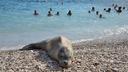
Mediterranean Monk Seal Sighted in Adriatic; Scientists Optimistic About Food Availability
Translated from Croatian, summarized and contextualized by DistantNews.
At a glance
News
Sources not specified
Context piece
- A Mediterranean monk seal, a protected and endangered species, has been sighted in the Zadar archipelago, raising hopes for its potential return to the Adriatic Sea.
- Scientists from the Institute of Oceanography and Fisheries in Split are encouraged by the sighting, indicating that the Adriatic likely offers sufficient food resources for the species.
- Research suggests that while some prey species show positive or stable trends, local issues like overfishing and habitat degradation could still pose challenges for the seal's long-term return.
The sighting of a Mediterranean monk seal in the Zadar archipelago has brought a wave of optimism to local residents and scientists alike. This rare and protected species, once a common inhabitant of the Adriatic Sea throughout the 19th century, has not been seen in these waters for decades. Its reappearance is considered encouraging news by researchers at the Institute of Oceanography and Fisheries in Split.
Scientists emphasize that the seal's temporary presence suggests the Adriatic Sea may provide suitable conditions for its survival, particularly regarding food availability. A study published in Frontiers in Marine Science analyzed long-term trends of key prey species for the monk seal. Out of 12 analyzed prey types, four showed positive population trends, while most others remained stable or varied regionally. Only a few species exhibited negative trends.
To have a species truly return, it's not enough for it to swim back into the Adriatic. It must find suitable living conditions here, and one of the most important is the availability of diverse food. That's precisely what we investigated using data from scientific research, coastal fishing catches, and official landing statistics.
"In other words, there is still enough diverse prey in the eastern Adriatic, and its availability across the entire area is likely not an obstacle to the return of the Mediterranean monk seal," the scientists explained. However, they cautioned that local problems might persist where declining prey populations overlap with intensive coastal fishing and habitat degradation. The species requires undisturbed coastal areas, suitable caves, and shelters for resting and breeding.
The Mediterranean monk seal (Monachus monachus) is one of the world's most endangered marine mammals, with an estimated global population of only around 600 individuals. Historically found in the Mediterranean Sea and eastern Atlantic Ocean, its populations are now fragmented. The Adriatic Sea was once part of its territory, with the first recorded description dating back to a catch near the island of Cres in 1777. The seal, a large pinniped, typically measures 2.1 to 2.7 meters in length and weighs between 240 and 300 kilograms.
In other words, there is still enough diverse prey in the eastern Adriatic, and its availability across the entire area is likely not an obstacle to the return of the Mediterranean monk seal.
DistantNews Editorial
Originally published by Večernji List in Croatian. Translated, summarized, and contextualized by our editorial team with added local perspective. Read our editorial standards.
More Stories

From Our Blog

What Gets Lost (and Found) When News Is Translated

The Critical Role of Diaspora Media in Global News

What Travellers Should Know About Countries with Restricted Press

A Digital Nomad's Guide to Following Local News

How the Same Story Looks Different in Different Countries
