


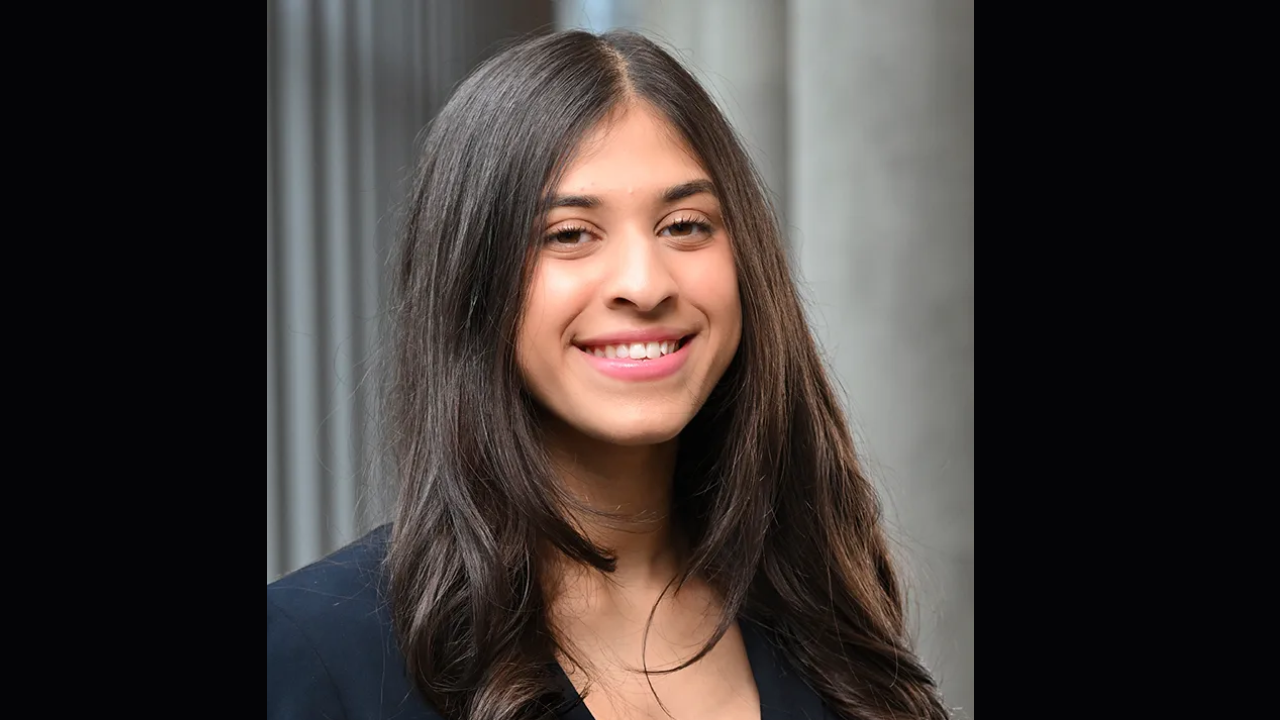
Meet Ashka Shah, the 17-year-old New York student who studied how a cancer-driving protein
Summarized and contextualized by DistantNews.
At a glance
In-depth
Named sources
Context piece
- Ashka Shah, a 17-year-old high school student from New York, has developed a novel method to target cancer cells.
- Her research focuses on blocking a cancer-driving protein, beta-catenin, without harming healthy cells, earning her national recognition.
- Shah was a finalist in the Regeneron Science Talent Search, a prestigious competition for high school students.
Ashka Shah, a 17-year-old senior at Jericho High School in New York, has gained national recognition for her innovative approach to cancer research. She has developed a method to selectively target and block the growth of cancer cells by interfering with a key protein, beta-catenin, without disrupting its essential functions in healthy tissues.
Shah's project centers on the Wnt signaling pathway, a crucial biological system for normal cell growth. Mutations can cause beta-catenin to accumulate and activate genes that promote aggressive tumor development, particularly in liver and colorectal cancers. The challenge has been to target beta-catenin, as it also plays a vital structural role in healthy cells, making complete blockage potentially toxic.
Instead of a full blockade, Shah focused on how mutant beta-catenin enters the cell nucleus to drive cancer growth. Her research, detailed in her project profile by the Society for Science, identified a helper protein, Gid8, that facilitates this harmful transport. By using a targeted peptide, Shah successfully blocked the Gid8-assisted process, preventing mutant beta-catenin from reaching the nucleus and initiating uncontrolled cell division, while preserving its normal function in healthy cells.
This groundbreaking work, titled "Selective Dual Inhibition of beta-Catenin in Wnt-Driven Cancers via Gid8-Assisted Translocation and a Precision Peptide-Based Gene Therapy," presents a potential new avenue for precision cancer treatment. Shah's achievement was recognized with her selection as one of 40 national finalists in the 2026 Regeneron Science Talent Search, one of the nation's most esteemed science competitions for high school students. She was among 2,612 applicants, the largest pool since 1967, and each finalist receives at least $25,000.
DistantNews Editorial
Originally published by Times of India. Summarized and contextualized by our editorial team with added local perspective. Read our editorial standards.
More Stories


From Our Blog

What Press Freedom Means for the News You Read

What Gets Lost (and Found) When News Is Translated

The Critical Role of Diaspora Media in Global News

What Travellers Should Know About Countries with Restricted Press

A Digital Nomad's Guide to Following Local News
