


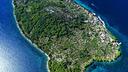
Meet Croatia's Smallest Inhabited Island: Home to Just 35 People
Translated from Croatian, summarized and contextualized by DistantNews.
At a glance
In-depth
Sources not specified
Context piece
- Ošljak, Croatia's smallest inhabited island, is home to 35 people and has a history dating back to the 17th century as a quarantine hospital.
- The island, covering 0.39 square kilometers, is a popular tourist destination with traditional architecture and a park-forest, though it lacks shops.
- Visitors can explore historical sites, enjoy fishing and diving, and access the island via ferry, with cars being prohibited.
Ošljak, a Croatian island often called Lazaret, is the nation's smallest inhabited island, with a population of just 35 residents. This tiny isle, spanning 0.39 square kilometers in the Zadar channel, carries a rich history, serving as a quarantine hospital in the 17th century for those suffering from leprosy and plague.
Locals proudly point to a water collection system built during the Italian occupation in World War II, which still supplies the island.
Today, Ošljak presents an idyllic escape, boasting around 60 houses nestled amidst beautiful nature and traditional Mediterranean architecture. Its population, which increased by six from 2011 to 2021, fluctuates seasonally, with only a handful of residents in winter and full accommodation capacity in summer. The island is largely covered by a park-forest featuring pines, cypresses, and holm oaks, complemented by olive groves and Mediterranean scrub.
Visitors can explore a fishing port, a 6th-century church, 16th-century windmill ruins, and remnants of a summer residence. The historical village of Valčić, dating back to the 17th and 18th centuries, and a World War II bunker add to its historical tapestry. The old island school, once closed due to low student numbers, has been revitalized as a cultural and entertainment hub.
A two-kilometer walking path leads to the island's highest point at 90 meters, offering stunning views.
Locals proudly point to a water collection system built during the Italian occupation in World War II, which still supplies the island. Cars are banned, making bicycles and walking the primary modes of transport. A two-kilometer walking path leads to the island's highest point at 90 meters, offering stunning views. Ošljak also offers excellent fishing and diving opportunities, with Croatia's first artificial reef located nearby to preserve marine life.
The first artificial reef in Croatia has been placed near the coast of Ošljak to preserve the underwater environment and expand sea-related activities.
Access to Ošljak is via a twice-daily ferry service from Zadar or Preko. While private boats are an option, it's important to note the absence of any shops on the island, even in summer. Residents and visitors rely on supplies from nearby Preko or Zadar.
If you have your own boat, you can also come to the island independently. During the summer months, Ošljak is a favorite destination for boat trips.
DistantNews Editorial
Originally published by Večernji List in Croatian. Translated, summarized, and contextualized by our editorial team with added local perspective. Read our editorial standards.
More Stories



From Our Blog

What Gets Lost (and Found) When News Is Translated

The Critical Role of Diaspora Media in Global News

What Travellers Should Know About Countries with Restricted Press

A Digital Nomad's Guide to Following Local News

How the Same Story Looks Different in Different Countries
