


Melk Summer Games: Orwell's Dystopian Minions Rage Here – Along with Real Mosquitoes
Translated from German, summarized and contextualized by DistantNews.
At a glance
In-depth
Named sources
Context piece
- The Melk Summer Games presented a science-fiction drama titled "The Ministry of Truth," inspired by George Orwell's "1984."
- The play explored themes of surveillance, disinformation, and the suppression of freedom in a totalitarian state, using a choir to represent society.
- The production, set against the backdrop of Melk Abbey, highlighted parallels between Orwell's dystopia and historical and modern forms of control.
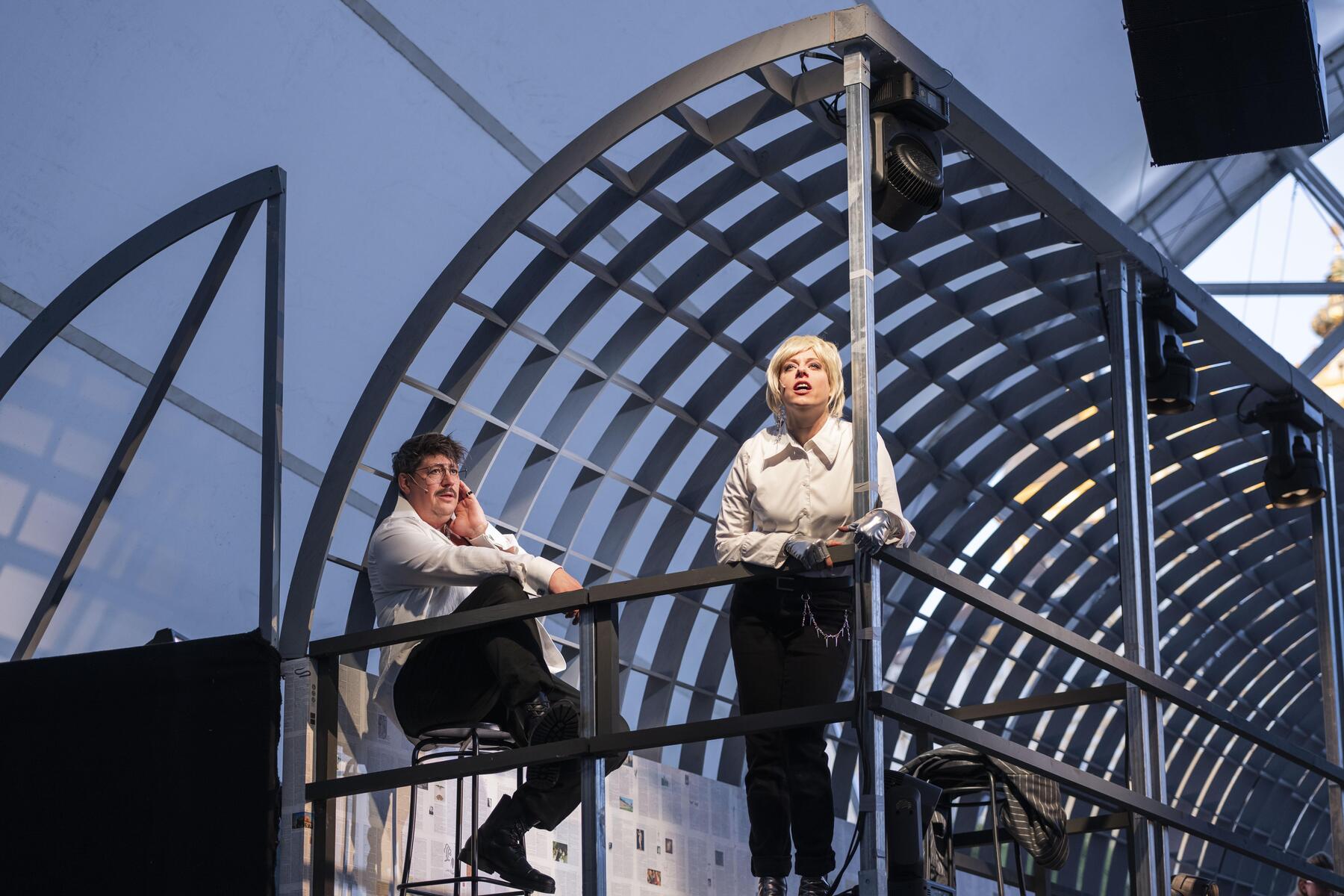
The Melk Summer Games staged "The Ministry of Truth," a stark science-fiction drama drawing inspiration from George Orwell's "1984." Set against the imposing backdrop of Melk Abbey, the production explored a chilling future society under an all-powerful surveillance state.
The Ministry of Truth is a pointed science fiction piece that spans the arc from Metternich to the modern corporate world in the shadow of the monastery.
Directed by Alexander Hauer, the play centered on Nora, a young woman who finds herself in conflict with the authorities. The narrative, penned by Jérôme Junod, depicted a society controlled by fear and disinformation, where concepts like freedom and joy have vanished from the vocabulary. Characters cannot trust partners, neighbors, or colleagues, and dissenters face erasure, referred to as being "wiped out" in the regime's new language.
A standout directorial choice was the integration of the Lower Austria Concert Choir. This choir, dressed in somber gray, served as a commentary on society, echoing ancient Greek tragedies and Bach's Passions. Their unison discussion of a typical vacation during Nora's workday drew a parallel to the modern corporate world. The choir also powerfully amplified Nora's anguish through dissonant harmonies, underscoring her torment.
The best directorial idea was to integrate the Lower Austria Concert Choir into the play.
The production cleverly connected its themes to historical contexts. The choir's rendition of the folk song "Kein schöner Land in dieser Zeit" (No More Beautiful Land in This Time) evoked the Biedermeier era, when Metternich's secret police sought to create model citizens. The play also subtly alluded to the Catholic Church's historical power, suggesting a parallel to the rigid systems Orwell described. While the audience area was covered, the stage offered views of the abbey, prompting reflection on past and present forms of control.
No More Beautiful Land in This Time
DistantNews Editorial
Originally published by Die Presse in German. Translated, summarized, and contextualized by our editorial team with added local perspective. Read our editorial standards.
More Stories



From Our Blog

What Gets Lost (and Found) When News Is Translated

The Critical Role of Diaspora Media in Global News

What Travellers Should Know About Countries with Restricted Press

A Digital Nomad's Guide to Following Local News

How the Same Story Looks Different in Different Countries
