


Menko Zulhas Introduces Lahsamor, BRIN Technology to Tackle Organic Waste in Bali
Translated from Indonesian, summarized and contextualized by DistantNews.
At a glance
News
Sources not specified
New plan
- Indonesia's Coordinating Minister for Food Affairs, Zulkifli Hasan, introduced "lahsamor," a new technology from BRIN to manage organic waste in Bali.
- Lahsamor is designed to process household organic waste, potentially reducing the volume sent to landfills by up to 40%.
- The introduction of lahsamor is part of a broader government plan to tackle Bali's waste problem, including a future Waste-to-Energy project.
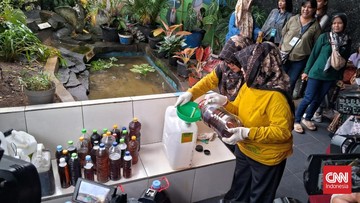
Coordinating Minister for Food Affairs Zulkifli Hasan has introduced "lahsamor," an innovative technology developed by Indonesia's National Research and Innovation Agency (BRIN), aimed at tackling Bali's persistent organic waste problem. The technology was unveiled during a waste sorting rally in Denpasar.
Hasan emphasized that effective waste management hinges on the separation of organic and inorganic materials. "The key is sorting organic and inorganic waste, and here is a tool, made by BRIN," he stated. The lahsamor technology, housed in a drum, is designed to process approximately 0.5 to 1 kilogram of household organic waste daily. It is claimed to reduce the daily volume of waste sent to final processing sites (TPA) by up to 40%, although its current use is limited to a household scale.
The lahsamor system operates simply: users add 0.5-1 kg of decaying organic waste daily and turn a lever five times. Unlike conventional compost bins that require manual removal and additional materials, lahsamor automatically dispenses compost when the user opens and turns the device. This innovation is intended to complement existing solutions like modern composting pits, offering an alternative for residents who cannot create such facilities on their property.
While lahsamor offers a technological solution, Hasan reiterated that waste sorting remains the primary step in addressing the waste crisis. He suggested that if sorting is challenging at home due to habit changes, it should be more manageable in organized settings like schools, offices, or shopping centers. The government also plans to launch a larger-scale Waste-to-Energy (PSEL) project in Bali, scheduled to begin construction on July 8, 2026, to manage inorganic waste and address issues like open dumping, which has led to emergencies such as fires and fatalities.
Hasan highlighted that the PSEL project aims to resolve the critical issue of open dumping, citing recent incidents like a fire in Jatiwaringin and fatalities in Bantar Gebang as evidence of the emergency. The introduction of lahsamor represents a step towards more sustainable waste management practices in Bali, supporting both household-level processing and larger-scale governmental initiatives.
DistantNews Editorial
Originally published by Republika in Indonesian. Translated, summarized, and contextualized by our editorial team with added local perspective. Read our editorial standards.
More Stories


From Our Blog

What Gets Lost (and Found) When News Is Translated

The Critical Role of Diaspora Media in Global News

What Travellers Should Know About Countries with Restricted Press

A Digital Nomad's Guide to Following Local News

How the Same Story Looks Different in Different Countries
