


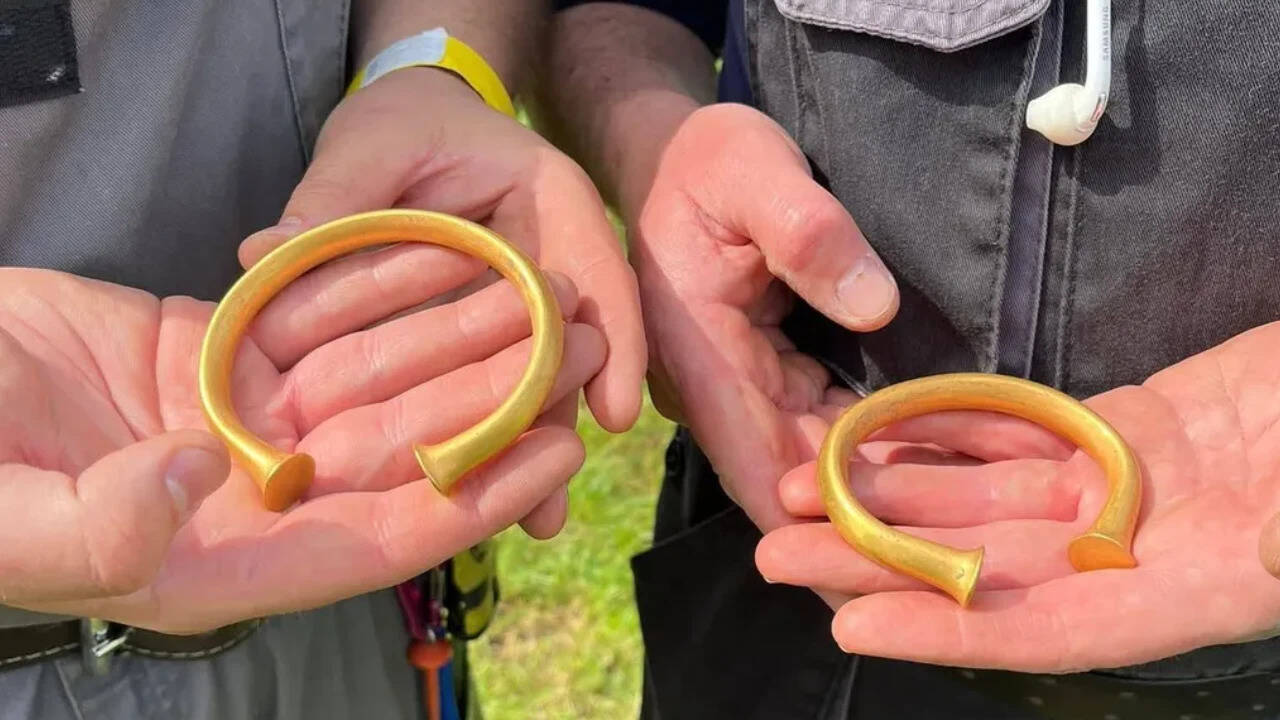
Metal detectorist finds 3,000-year-old gold torcs in England
Translated from English, summarized and contextualized by DistantNews.
At a glance
News
Sources not specified
Outcome reported
- Two metal detectorists discovered three complete gold armbands, known as torcs, dating back over 3,000 years.
- The exceptionally rare Bronze Age find near Carlisle, England, was unearthed during a rally protesting a proposed electricity substation.
- Valued at over $400,000, the torcs are undergoing assessment under Britain's Treasure Act to determine ownership and potential rewards for the finders.
A routine metal-detecting rally near the Scottish border turned into an archaeological breakthrough when Andy Crammond and Alan Daniels unearthed three complete gold torcs. Crammond initially mistook the gleaming object for a bull's nose ring, but its weight and shine suggested something more significant. Further investigation revealed two more remarkably similar gold objects nearby, transforming the day into an extraordinary find.
the object's unusual shine and weight quickly made him suspect it was something much older and more valuable.
Specialists identified the objects as complete gold torcs dating back to around 1100 BCE, a period marking the transition between Britain's Middle and Late Bronze Age. Archaeologist Jim Morris described the discovery as spectacular, emphasizing the rarity of finding complete torcs from this era. Typically, surviving examples are fragmented, making the discovery of three intact pieces together particularly significant.
The torcs, weighing approximately 18.3 ounces combined, are valued at over $400,000. These ancient artifacts, which could have been worn on the neck or wrist, are thought to symbolize wealth, status, or authority, though some researchers suggest ceremonial or ritualistic purposes. The condition of some torcs indicates they were used over long periods before being buried.
even finding a single intact torc is unusual, making the discovery of 3 complete examples together particularly significant.
The find has been submitted for assessment under Britain's Treasure Act. This legislation will determine if the archaeologically significant discovery belongs to the Crown and if the finders and landowners are eligible for a reward. For Crammond and Daniels, the discovery represents the pinnacle of their metal-detecting hobby, far surpassing anything they had previously encountered.
the pair had never found anything comparable.
DistantNews Editorial
Originally published by Times of India in English. Translated, summarized, and contextualized by our editorial team with added local perspective. Read our editorial standards.
More Stories



From Our Blog

What Press Freedom Means for the News You Read

What Gets Lost (and Found) When News Is Translated

The Critical Role of Diaspora Media in Global News

What Travellers Should Know About Countries with Restricted Press

A Digital Nomad's Guide to Following Local News
