


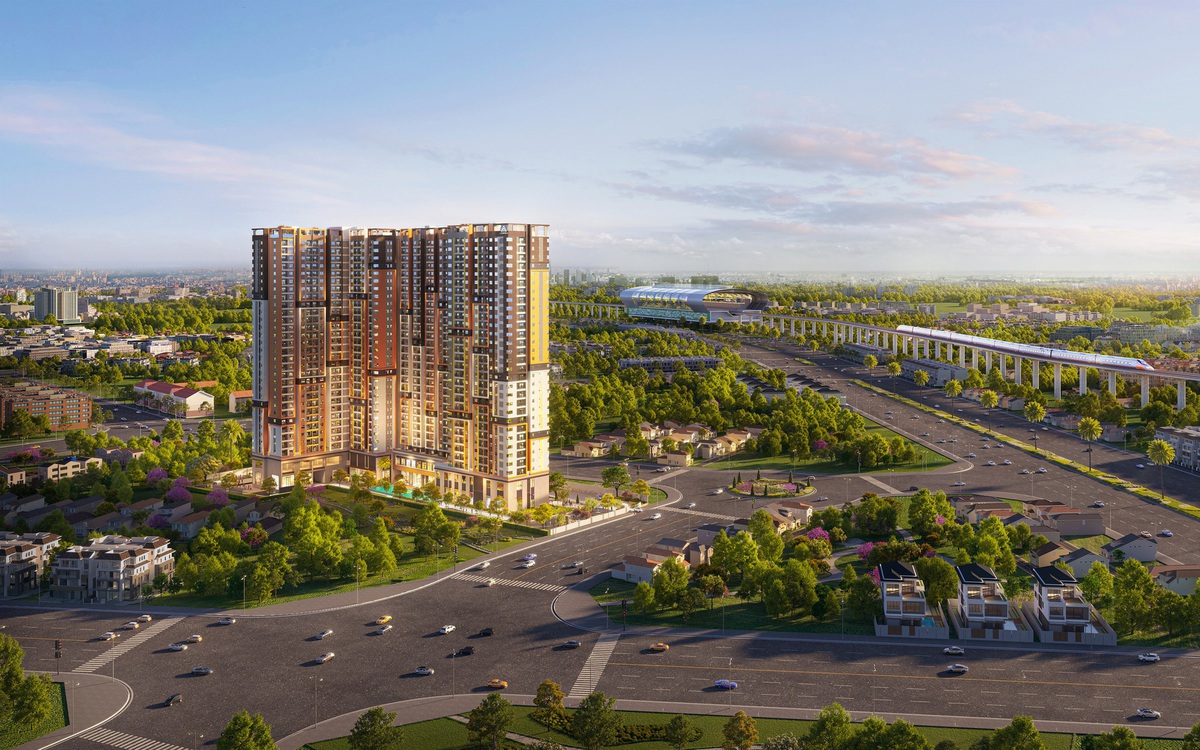
Metro Connectivity Opens Up 'Good Price Zone' for The Aspira
Translated from Vietnamese, summarized and contextualized by DistantNews.
At a glance
News
Sources not specified
Context piece
- Metro lines significantly impact real estate prices, with projects along Metro Line 1 seeing 35-70% increases and some doubling in value.
- Developing TOD (Transit-Oriented Development) around public transport hubs, inspired by cities like Singapore and Japan, is becoming a key driver in real estate value.
- Ho Chi Minh City aims to complete its metro network by 2030, with new extensions planned, fostering new development corridors and attracting investment, particularly in areas like Thu Duc City and Binh Duong.
The development of metro lines is profoundly reshaping real estate values in Ho Chi Minh City, with past trends showing significant price hikes for properties along existing routes. Savills reports that projects along Metro Line 1 have experienced price increases ranging from 35% to 70%, with some even doubling in value once infrastructure became operational. Even before the full metro ecosystem is complete, high-end apartments in areas like Thu Duc City command prices between 80-140 million VND per square meter, especially in locations with superior connectivity.
This phenomenon mirrors successful Transit-Oriented Development (TOD) models seen in global cities such as Singapore, Japan, and South Korea. In these TOD environments, urban development is centered around public transport hubs, integrating housing, commerce, services, and community spaces. The value of proximity is increasingly measured by travel time rather than physical distance. JLL Vietnam notes that properties adjacent to metro stations see substantial price increases, averaging $200-$250 USD per square meter annually, a rate nearly double the average market increase in Ho Chi Minh City.
Research from Van Lang University indicates that land prices near metro stations are approximately 12.4% higher than those further away, sparking a new wave of investor interest. Investors are now looking beyond already-inflated areas to identify locations poised for similar growth cycles. The city is accelerating infrastructure projects, with a goal to complete the metro network by 2030. A planned extension from Suoi Tien to Tan Van is expected to enhance connectivity between Ho Chi Minh City and the former Binh Duong province, further stimulating development.
Areas like the eastern gateway of Thu Duc City and Di An are emerging as new development axes, driven by the convergence of metro lines, TOD principles, and the Ring Road 3 project. The Aspira project, situated within an 18.8-hectare TOD core and directly connected to Metro Line 1, is designed as a 'TOD Living Hub,' focusing on smart living and building experiences within a connected ecosystem.
DistantNews Editorial
Originally published by Tuổi Trẻ in Vietnamese. Translated, summarized, and contextualized by our editorial team with added local perspective. Read our editorial standards.
More Stories

From Our Blog

What Gets Lost (and Found) When News Is Translated

The Critical Role of Diaspora Media in Global News

What Travellers Should Know About Countries with Restricted Press

A Digital Nomad's Guide to Following Local News

How the Same Story Looks Different in Different Countries
