

MetroRiel depends on Belice II and Cenma-Frutal bridges to be profitable and sustainable, warns Fundesa
Translated from Spanish, summarized and contextualized by DistantNews.
At a glance
News
Sources not specified
Context piece
- The MetroRiel project in Guatemala's metropolitan area requires the construction of the Belice II and Cenma-Frutal bridges to be financially viable and sustainable.
- Fundesa warns that the project needs to transport around 200,000 passengers daily to reach its operational break-even point.
- Current government studies, supported by the World Bank, aim to update feasibility and financial models to reflect post-pandemic urban mobility changes.
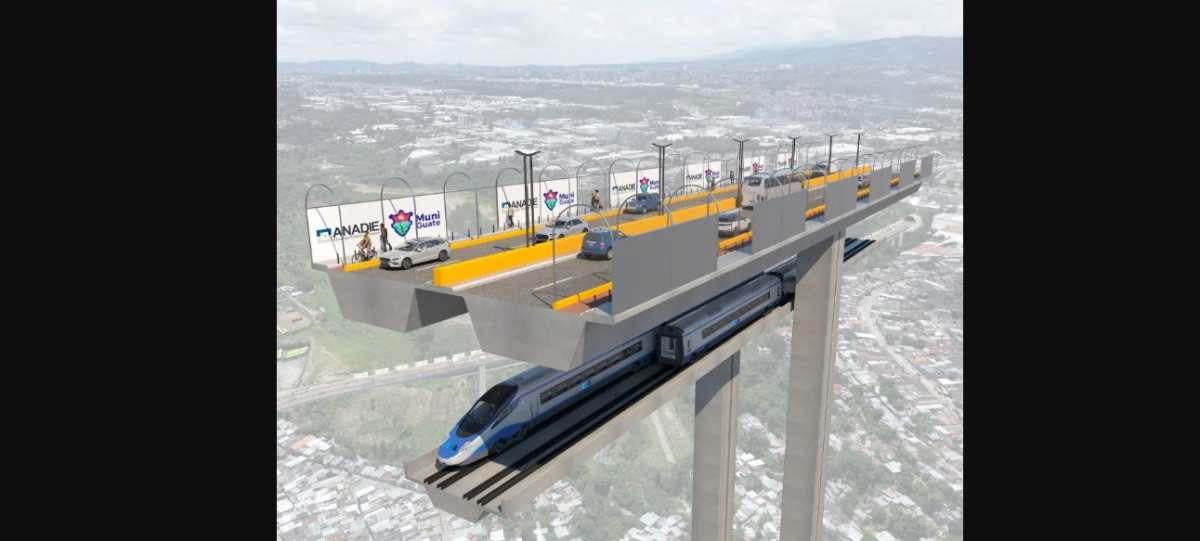
The MetroRiel project, a proposed rail system for Guatemala's metropolitan area, faces a critical dependency on the completion of the Belice II and Cenma-Frutal bridges, according to the Foundation for Development of Guatemala (Fundesa). These bridges are identified as indispensable infrastructure for achieving the passenger demand necessary for the system's sustainable operation.
The viability of the MetroRiel system is closely related to the system's capacity to move more than 200,000 passengers daily, a figure that arises from technical studies developed for the project.
Fundesa highlights that the viability of the MetroRiel hinges on its capacity to transport approximately 200,000 passengers daily. This figure, derived from technical studies, represents the break-even point for the project's financial and operational equilibrium. Juan Carlos Zapata, executive director of Fundesa, explained that the original planning, conducted in 2016 by IDOM for Anadie and Fegua, projected a daily capacity of nearly 250,000 users. The study indicated that while passengers might be willing to pay around Q4 per trip, the technical fare required to operate the system is approximately Q11, necessitating substantial state subsidies. Therefore, achieving a high passenger volume is crucial for distributing investment and operational costs.
The estimation is based on the study prepared in 2016 by the firm IDOM for the National Agency for Economic Development Partnerships (Anadie) and the Fund for Railway Development (Fegua).
A key element identified in the studies is the Cenma-Frutal bridge, which would connect sectors like Petapa, Cenma, and Calzada Atanasio Tzul. Initial analyses suggest this connection alone could potentially double the demand for rail users in that corridor. The original plan envisioned frequencies as low as three minutes during peak hours, accommodating up to 17,600 passengers per hour on the busiest segments.
The study determined that the population was willing to pay around Q4 per trip, while the technical fare required to operate the system was approximately Q11 per user.
Currently, the Guatemalan government is undertaking new feasibility studies, economic evaluations, demand updates, and financial models with assistance from the World Bank. These efforts aim to revise the decade-old projections and adapt them to the evolving urban mobility landscape following the COVID-19 pandemic. The success of the MetroRiel project appears intrinsically linked to these infrastructure developments and updated ridership estimates.
The Cenma-Frutal bridge... initial analyses concluded that this connection would have the capacity to double the demand for rail users in that corridor.
DistantNews Editorial
Originally published by Prensa Libre in Spanish. Translated, summarized, and contextualized by our editorial team with added local perspective. Read our editorial standards.
More Stories

From Our Blog

What Gets Lost (and Found) When News Is Translated

The Critical Role of Diaspora Media in Global News

What Travellers Should Know About Countries with Restricted Press

A Digital Nomad's Guide to Following Local News

How the Same Story Looks Different in Different Countries
