

Mexicable Line 3 Route Adjusted for National Security, Launch Delayed to 2027
Translated from Spanish, summarized and contextualized by DistantNews.
At a glance
News
Named sources
Ongoing story
- Mexico's Mexicable Line 3 has altered its route to avoid passing over a military facility for national security reasons.
- This adjustment, requested by the Ministry of National Defense, has delayed the project's operational start to the first half of 2027.
- The modification involves adding an intermediate station and addressing technical challenges like elevating high-voltage power lines.
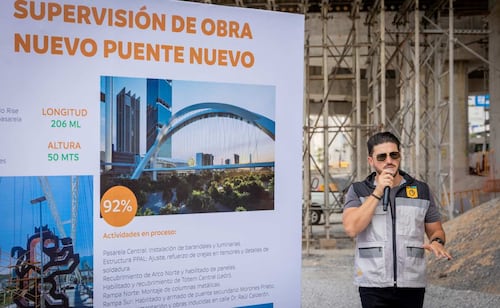
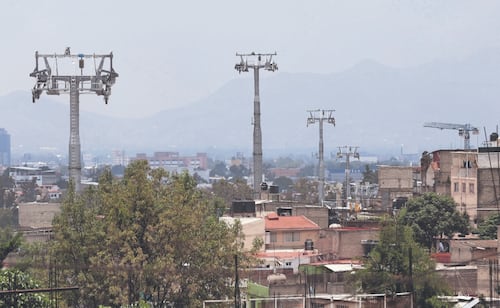
The third line of Mexico's Mexicable aerial tramway system is undergoing a route modification to ensure national security, specifically by avoiding a military installation in Naucalpan. The Secretariat of National Defense (Sedena) requested the change, which has pushed the system's operational launch to the first half of 2027.
It was a matter of national security that the Military Camp cannot be exposed from the outside.
Rebeca Ortega Reyes, a project liaison for the State of Mexico's Mass Transport and Cable Car System (Sitramytem), explained that the work at the Cuatro Caminos station was suspended due to the security concerns. "It was a matter of national security that the Military Camp cannot be exposed from the outside," she stated. The station had already reached over 85% completion, but the electromechanical systems had to be removed to accommodate the new route.
We are in this phase of analysis, it has to be done because we are no longer going to cross the Military Camp, we are only going to cross a fraction of it.
The revised plan includes an intermediate station between Cuatro Caminos and Lázaro Cárdenas. This segment also presents a challenge with high-voltage power lines from the Federal Electricity Commission (CFE) that require elevation. Similar issues with high-voltage lines also exist at the Parque La Hormiga station. Further along the route, near the Hondo and Verde rivers, authorization from the National Water Commission (Conagua) was needed for construction, leading to the installation of early warning alert systems as a community benefit.
Our enthusiasm for the project led us to communicate in a way that created confusion.
DistantNews Editorial
Originally published by El Universal in Spanish. Translated, summarized, and contextualized by our editorial team with added local perspective. Read our editorial standards.
More Stories
From Our Blog

What Press Freedom Means for the News You Read

What Gets Lost (and Found) When News Is Translated

The Critical Role of Diaspora Media in Global News

What Travellers Should Know About Countries with Restricted Press

A Digital Nomad's Guide to Following Local News
