


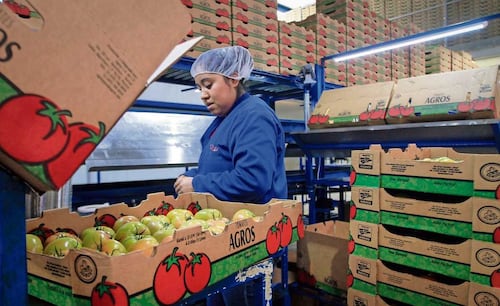
Mexican exporters fear U.S. trade barriers on seasonal produce during T-MEC talks
Translated from Spanish, summarized and contextualized by DistantNews.
At a glance
News
Named sources
Ongoing story
- Mexican agricultural exporters fear new barriers to trade with the U.S. during the T-MEC review, particularly regarding seasonal produce.
- U.S. trade representatives may seek to restrict imports of fruits and vegetables like berries, avocados, and cucumbers during specific times of the year.
- Mexico argues that such seasonal restrictions violate T-MEC and WTO rules, while also facing potential U.S. actions on tomatoes, beef, and strawberries.
Mexican agricultural businesses are bracing for potential new trade hurdles with the United States, as the second round of T-MEC review talks commence in Washington. Empresarios warn that the U.S. Trade Representative's office (USTR) is likely to push for restrictions on the import of Mexican fruits and vegetables based on seasonality. This move, similar to one seen in 2017, aims to prevent Mexican produce from competing with U.S. harvests during certain periods.
The National Agroindustrial Council (CNA) anticipates that berries, including strawberries and blueberries, along with avocados, cucumbers, grapes, and asparagus, could be targeted. Juan Cortina, vice president of the Business Coordinating Council (CCE), noted that the Trump administration might employ anti-dumping rules for specific crop cycles. However, Mexico contends that seasonality-based restrictions contravene the T-MEC agreement and World Trade Organization regulations, creating an international conflict.
The USTR will propose that these foods cannot cross during certain times of the year to prevent them from competing with the U.S. harvest.
Further complicating matters, Mexico anticipates the revival of trade friction points. This includes a potential 17.09% countervailing duty on tomatoes, following the suspension of a prior agreement due to U.S. claims of underpriced imports. Additionally, restrictions on Mexican beef exports due to the screwworm and an ongoing investigation into alleged unfair practices concerning Mexican strawberries are expected to be revisited. The USTR's 2026 National Report on Foreign Trade Barriers also highlights U.S. agricultural producers' concerns about Mexican restrictions on genetically modified corn, potatoes, sanitary regulations, and bureaucratic hurdles for importing U.S. agricultural chemicals and biotechnological permits.
Mexican industry experts also foresee U.S. legislators using the T-MEC review to pressure Mexico into eliminating reinspections of grains. They also anticipate calls to revise the zero-tolerance policy on soil residues and to resolve disputes over agricultural biotechnology, which reportedly create additional costs and delays for American businesses. The ongoing trade discussions underscore the delicate balance of agricultural interests between the two North American neighbors.
Seasonality goes against the rules of T-MEC and the World Trade Organization, meaning there is an international incompatibility.
DistantNews Editorial
Originally published by El Universal in Spanish. Translated, summarized, and contextualized by our editorial team with added local perspective. Read our editorial standards.
More Stories



From Our Blog

What Press Freedom Means for the News You Read

What Gets Lost (and Found) When News Is Translated

The Critical Role of Diaspora Media in Global News

What Travellers Should Know About Countries with Restricted Press

A Digital Nomad's Guide to Following Local News
