

Mexican Lawmaker Criticizes Electoral Institute for Censoring Speech
Translated from Spanish, summarized and contextualized by DistantNews.
At a glance
News
Named sources
Context piece
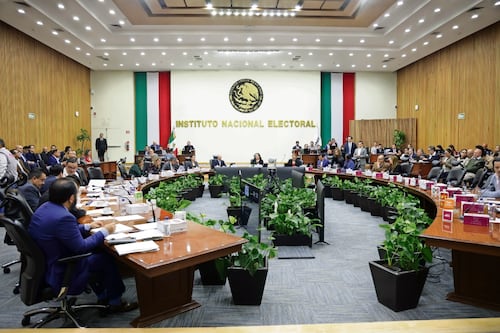
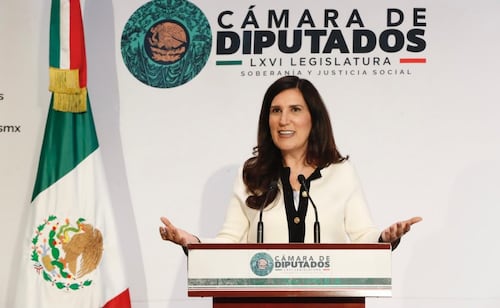
- Kenia López Rabadán, president of the Chamber of Deputies, criticized the National Electoral Institute (INE) for acting as a "censor of public debate."
- Her remarks followed the INE's precautionary measures against Senator Alejandro "Alito" Moreno for using terms like "narcogobierno" and "Cártel de Morena" on social media.
- López argued that Mexico needs a strong electoral authority focused on substance, not on dictating language, especially given the country's security challenges.
Kenia López Rabadán, president of the Chamber of Deputies' Board of Directors, has sharply criticized the National Electoral Institute (INE), urging it to exercise "maximum prudence when political freedoms are at stake" and to avoid acting as a "censor of public debate." Her strong statement came in response to the INE's precautionary measures against Senator Alejandro "Alito" Moreno, the national leader of the PRI party. Moreno had used terms such as "narcogobierno," "narcopropagandista," and "Cártel de Morena" in social media posts, which the INE sought to restrict.
López Rabadán, a legislator from the PAN party, asserted that Mexico requires a robust electoral authority, not one that dictates acceptable language or critiques. "Democracy weakens when people are silenced," she stated during a press conference. She emphasized that in a country grappling with a severe violence crisis and concerns about organized crime's potential influence in public life, preventing the investigation, discussion, or questioning of these issues is counterproductive.
Mexico needs a strong electoral authority, not an authority that ends up deciding what criticisms can be made or what words can be used. Democracy weakens when people are silenced.
"Authorities must act against disinformation in accordance with the law, but that responsibility cannot translate into undue restrictions on freedom of expression, nor should it inhibit criticism, journalistic investigation, or the legitimate scrutiny of public power," López Rabadán argued. Her comments underscore a growing tension between electoral oversight bodies and political actors regarding the boundaries of free speech, particularly when discussing sensitive topics like organized crime and its alleged links to politics.
Authorities must act against disinformation in accordance with the law, but that responsibility cannot translate into undue restrictions on freedom of expression, nor should it inhibit criticism, journalistic investigation, or the legitimate scrutiny of public power.
DistantNews Editorial
Originally published by El Universal in Spanish. Translated, summarized, and contextualized by our editorial team with added local perspective. Read our editorial standards.
More Stories
INE Councilor Asks Morenista Colleague to Leave Anti-Drug Commission, Cites Conflict of Interest
Bonilla denies 'psychological ambush' against Marina del Pilar; demands halt to 'emotional blackmail…
"Mexico is no one's piñata," says Sheinbaum amid U.S. politicians' attacks; urges against using coun…
From Our Blog

What Press Freedom Means for the News You Read

What Gets Lost (and Found) When News Is Translated

The Critical Role of Diaspora Media in Global News

What Travellers Should Know About Countries with Restricted Press

A Digital Nomad's Guide to Following Local News
