

Mexican Politician Warns Government Truth Definition Threatens Democracy
Translated from Spanish, summarized and contextualized by DistantNews.
At a glance
News
Named sources
Context piece
- A Mexican political scientist warns that a government proposal to define
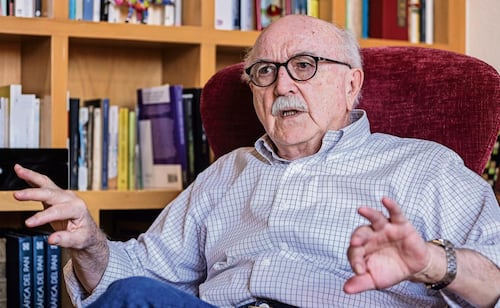
A proposed government initiative in Mexico to establish guidelines for protecting audience rights is drawing criticism from a prominent political scientist. Francisco Valdés Ugalde, a political scientist and sociologist, argues that any government or state defining "truth" undermines democracy and leans toward autocracy.
It's like creating a 'ministry of truth,' what we are seeing is closer to creating a tool for censorship than a tool for audiences.
Valdés Ugalde, who is also a researcher at the Institute of Social Investigations at UNAM and a professor at Flacso Mexico, expressed his concerns in an interview with EL UNIVERSAL regarding the new proposal by President Claudia Sheinbaum Pardo's administration. He believes that for a democratic regime to thrive, there must be complete freedom of expression and press, allowing audiences to form their own opinions, while laws should exist to safeguard rights.
"It's like creating a 'ministry of truth,' what we are seeing is closer to creating a tool for censorship than a tool for audiences," Valdés Ugalde stated, referring to the proposed dependency that would monitor media behavior. He characterized the initiative as a dangerous tool for control that could lead to repression and is incompatible with democratic standards.
When a government decides to take the definition of truth into its own hands, it is making a serious mistake, a mistake of an authoritarian nature.
He suggested that while ethics codes and ombudsman offices for audiences are valuable, they must remain autonomous from political power. Valdés Ugalde pointed to vague definitions within the guidelines concerning what constitutes truth, objective opinion, or appropriate media conduct, which he believes concentrates excessive control in a single agency dependent on the executive branch.
I see very vague definitions in the guidelines about what is truthful, what is an objective opinion, what is adequate conduct by the media to respect the rights of the audiences.
DistantNews Editorial
Originally published by El Universal in Spanish. Translated, summarized, and contextualized by our editorial team with added local perspective. Read our editorial standards.
More Stories
From Our Blog

What Press Freedom Means for the News You Read

What Gets Lost (and Found) When News Is Translated

The Critical Role of Diaspora Media in Global News

What Travellers Should Know About Countries with Restricted Press

A Digital Nomad's Guide to Following Local News
