

Mexican Researcher Presents AI-Powered Breast Cancer Detection with 90% Accuracy in France
Translated from Spanish, summarized and contextualized by DistantNews.
At a glance
News
Sources not specified
Context piece
- A researcher from the Polytechnic University of Tulancingo has developed an artificial intelligence model capable of identifying breast cancer with 90% accuracy.
- The AI system analyzes thermal images of the breast using convolutional neural networks and attention mechanisms.
- This innovative approach reduces processing time and improves the consistency of results compared to traditional methods.
Mexican researcher Raúl Castro Ortega has presented a groundbreaking study in France that utilizes artificial intelligence to detect breast cancer with remarkable accuracy. His model, developed at the Polytechnic University of Tulancingo, achieves up to 90% precision by automatically analyzing thermal images.
The system employs advanced convolutional neural networks with attention mechanisms. Unlike conventional methods that require specialists to pre-define image characteristics, Ortega's model autonomously learns patterns associated with both healthy and diseased breast tissue. This autonomous learning significantly reduces processing time and enhances the reliability of the findings.
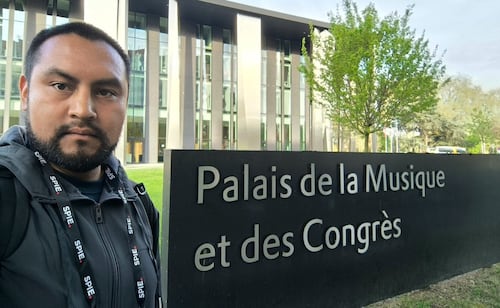
Ortega presented his findings at the SPIE Photonics Europe 2026 Congress in Strasbourg, France. The study, titled “Analysis of breast thermography using convolutional neural networks with attention mechanisms,” leverages a heat diffusion equation-based algorithm. This algorithm focuses the analysis on crucial regions within thermograms, enabling the system to classify tissues with high sensitivity and specificity.
This development holds significant promise for early breast cancer detection, offering a potentially faster and more consistent diagnostic tool. The AI's ability to independently identify subtle patterns could lead to earlier interventions and improved patient outcomes.
DistantNews Editorial
Originally published by El Universal in Spanish. Translated, summarized, and contextualized by our editorial team with added local perspective. Read our editorial standards.
More Stories


From Our Blog

What Press Freedom Means for the News You Read

What Gets Lost (and Found) When News Is Translated

The Critical Role of Diaspora Media in Global News

What Travellers Should Know About Countries with Restricted Press

A Digital Nomad's Guide to Following Local News
