


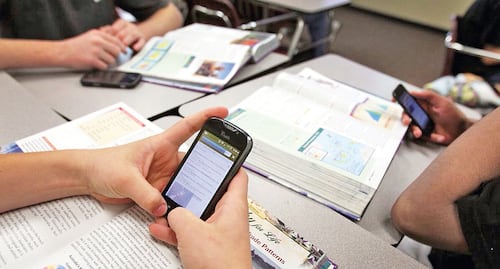
 Image: Archivo, especial.
Mexican state to ban cell phones in classrooms for K-12 students
Translated from Spanish and summarized by DistantNews. Read the original for the full story.
At a glance
News
Sources not specified
New plan
- The state of Morelos, Mexico, will mandate students deposit cell phones in designated containers at the start of the school day.
- This policy aims to reduce distractions in classrooms, which authorities identify as a cause of poor academic performance and dropout rates.
- The Ministry of Education will finalize the protocol for regulating screen use in schools during a national meeting.
Students in Mexico's Morelos state will be required to surrender their cell phones at the beginning of each school day under a new mandatory policy. The state's Ministry of Education confirmed that pupils must deposit their devices in assigned containers upon entering the classroom.
These phones will only be returned to students at the end of the class period or if they are needed for specific educational activities. The measure is designed to eliminate distractions in basic and upper secondary education classrooms. Educational authorities have identified these distractions as a primary factor contributing to low academic performance and school dropout rates.
According to state diagnostics, the continuous use of mobile devices during lessons directly correlates with an increase in the number of failing students in upper secondary education. The Ministry of Education is set to participate in a national meeting of sector authorities to finalize the legal and operational guidelines for this new protocol on screen use in the state's schools.
The initiative reflects a growing concern among educators about the impact of technology on student focus and academic achievement. By implementing this phone restriction, Morelos aims to create a more conducive learning environment and improve educational outcomes for its students.
The measure seeks to eradicate distraction in basic and upper secondary education classrooms.
About this summary
Originally published by El Universal in Spanish. Translated, summarized, and contextualized automatically by DistantNews, with a note on how the source frames the story. Not individually reviewed before publishing. How this works.
More Stories



From Our Blog

What Press Freedom Means for the News You Read

What Gets Lost (and Found) When News Is Translated

The Critical Role of Diaspora Media in Global News

What Travellers Should Know About Countries with Restricted Press

A Digital Nomad's Guide to Following Local News
