

Mexican teachers' union rejects violence in negotiations
Translated from Spanish, summarized and contextualized by DistantNews.
At a glance
News
Sources not specified
Context piece
- The National Union of Education Workers (SNTE) rejected and condemned blackmail, extortion, provocation, radicalization, or violence in political negotiations.
- SNTE stated that it disagrees with using violence and extortion as political pressure tactics, emphasizing its commitment to responsible, democratic, and transparent strategies for achieving gains.
- The union highlighted its position as the majority, legitimate, and legal representative of teachers nationwide, contrasting its methods with those of the National Coordinating Committee of Education Workers (CNTE).
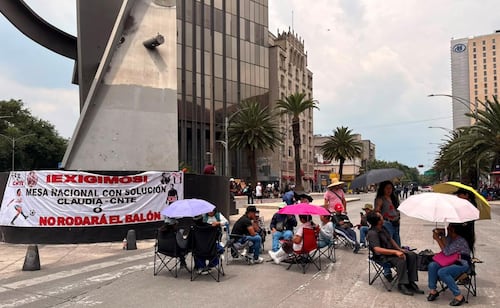
The National Union of Education Workers (SNTE) has strongly rejected and condemned any form of "chantage, extortion, provocation, radicalization, or violence" in political negotiations. In a statement, the SNTE declared its disagreement with using "violence and extortion as forms of political pressure," asserting that such tactics, which rely on strikes, blockades, conflicts, and harming third parties, are not the way to achieve progress.
The union drew a clear distinction between its approach and that of the National Coordinating Committee of Education Workers (CNTE). "The difference between SNTE and CNTE is evident; in SNTE, we believe in unity as a preponderant force and an instrument of transformation," the statement read. The SNTE positioned itself as the "majority, legitimate, and legal expression of teachers throughout the country."
According to the SNTE, its "advances, achievements, and conquests" have resulted from a "responsible, democratic, institutional, and transparent strategy." The union emphasized that the quality and viability of its proposals, along with its capacity for dialogue and negotiation, are based on the "permanent consultation" with its members. This approach, the SNTE concluded, underpins its status as the leading representative body for educators in Mexico.
No coincidimos en la violencia y extorsión como formas de presión política, fundada en la idea de que sólo mediante paros, bloqueos, conflictos y afectación a terceros, se pueden lograr conquistas
DistantNews Editorial
Originally published by El Universal in Spanish. Translated, summarized, and contextualized by our editorial team with added local perspective. Read our editorial standards.
More Stories



From Our Blog

What Press Freedom Means for the News You Read

What Gets Lost (and Found) When News Is Translated

The Critical Role of Diaspora Media in Global News

What Travellers Should Know About Countries with Restricted Press

A Digital Nomad's Guide to Following Local News
