

Mexico City businesses demand end to paralyzing blockades
Translated from Spanish, summarized and contextualized by DistantNews.
At a glance
News
Named sources
Ongoing story
- Business leaders in Mexico City are demanding an end to recurring blockades that paralyze the capital and harm the economy.
- Over a thousand restaurants and 20,000 workers have been affected by protests, primarily by the CNTE teachers' union, which has blocked the historic center for 17 days.
- Business groups urge federal and city authorities to resolve the conflict effectively, ensuring freedom of movement and economic activity.
Mexico City's business sector is sounding the alarm over the crippling economic and mobility impacts of persistent blockades. Leaders from the National Chamber of the Restaurant and Seasoned Food Industry (Canirac), Directors of Restaurant Chains (Dicares), and the Mexican Association of Restaurants (AMR) issued a joint statement asserting that "the City cannot be held hostage by recurring blockades."
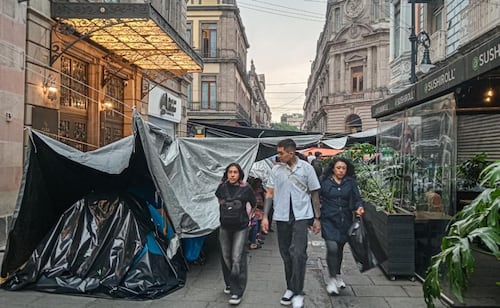
The ongoing protests, primarily by the National Coordinating Body of Education Workers (CNTE), have paralyzed the historic center for 17 days, demanding the repeal of the 2007 ISSSTE Law concerning pensions and social security. This disruption has limited the operations of over a thousand restaurants, affecting more than 20,000 workers and an estimated 100,000 potential diners per day.
Business leaders emphasized that while social protest is a protected right, it should not systematically infringe upon the rights of others. They highlighted that blocking restaurant zones impacts not just business owners but also waiters reliant on tips, cooks, delivery drivers, suppliers, and customers. Restaurants are described as vital economic and social hubs, serving as workplaces, tourism drivers, and direct support for thousands of families.
The groups are calling on federal and Mexico City authorities to take responsibility for resolving the conflict. They stress that dialogue must continue, but the city must also function. Beyond suggesting alternative routes, they demand effective measures to protect free transit, economic operations, and the safety of workers and customers, ensuring the continuity of essential activities.
DistantNews Editorial
Originally published by El Universal in Spanish. Translated, summarized, and contextualized by our editorial team with added local perspective. Read our editorial standards.
More Stories


From Our Blog

What Press Freedom Means for the News You Read

What Gets Lost (and Found) When News Is Translated

The Critical Role of Diaspora Media in Global News

What Travellers Should Know About Countries with Restricted Press

A Digital Nomad's Guide to Following Local News
