


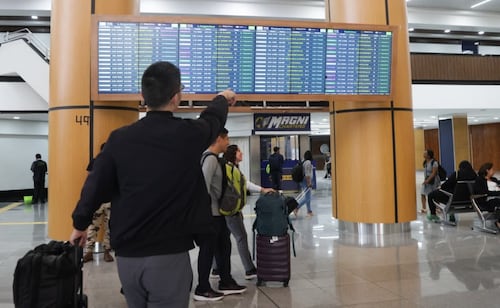
Mexico City Health Authorities Maintain Surveillance at AICM Ahead of World Cup; Vaccination Card Checks Ruled Out
Translated from Spanish, summarized and contextualized by DistantNews.
At a glance
News
Official statement
New plan
- Mexico City's health authorities are maintaining sanitary surveillance at the AICM ahead of the 2026 World Cup.
- They are monitoring travelers for symptoms but will not check vaccination cards.
- The focus is on epidemiological surveillance and early detection of health risks, aligning with international sanitary regulations.
As the 2026 World Cup approaches, Mexico City's health authorities are enhancing sanitary surveillance at the Mexico City International Airport (AICM). The Secretariat of Public Health is monitoring travelers for symptoms, aiming to detect potential health risks early. This initiative aligns with the International Health Regulations.
In the framework of sanitary preparation for massive international events, the Secretariat of Public Health of the Government of Mexico City strengthens sanitary actions at the Mexico City International Airport (AICM), on the eve of the World Cup, with activities focused on strengthening epidemiological surveillance and timely detection of sanitary risks, under an approach aligned with the International Sanitary Regulations (RSI).
Despite the increased vigilance, the Secretariat clarified that checking passengers' vaccination cards is not part of the current measures. The focus remains on epidemiological surveillance and inter-institutional coordination to identify symptomatic passengers and follow up on diseases of concern.
Mexico does not currently maintain mandatory vaccination requirements for entry into the country, so the systematic review of vaccination cards for all passengers is not one of the measures contemplated.
For illnesses like Ebola and hantavirus, for which no vaccines exist, the city's strategy relies on early detection of suspected cases, evaluation of epidemiological history, symptom identification, and prompt activation of response protocols. This approach prioritizes timely intervention over mandatory vaccination checks at entry points.
the capital administration's strategy is based on the early detection of suspected cases, evaluation of epidemiological history, identification of compatible symptoms, and timely activation of response protocols.
DistantNews Editorial
Originally published by El Universal in Spanish. Translated, summarized, and contextualized by our editorial team with added local perspective. Read our editorial standards.
More Stories


From Our Blog

What Press Freedom Means for the News You Read

What Gets Lost (and Found) When News Is Translated

The Critical Role of Diaspora Media in Global News

What Travellers Should Know About Countries with Restricted Press

A Digital Nomad's Guide to Following Local News
