

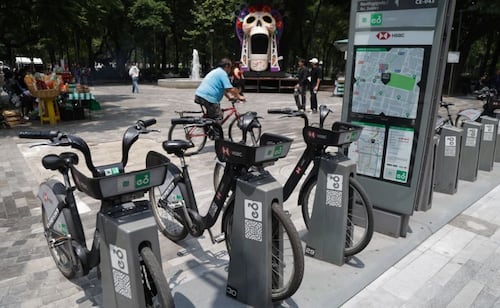
 Image: CARLOS MEJÍA/EL UNIVERSAL
🇲🇽
Mexico
Mexico City's Ecobici bike-share system faces new contract obligations
Translated from Spanish and summarized by DistantNews. Read the original for the full story.
At a glance
News
Sources not specified
New plan
- Mexico City's Ecobici bike-share system has a new contract with company 5M2, extending operations until 2036 with enhanced obligations for service quality.
- The new contract introduces specific penalties for delays in bike replacement and parts acquisition, and mandates satellite trackers on all bikes.
- Ecobici will expand to 15,000 bikes and 1,111 stations, reaching new boroughs, with a 10-year investment of up to 2.434 billion pesos.
Mexico City's Ecobici bike-share system is set for a significant upgrade under a new contract awarded to the company 5M2, extending its operation until 2036. The agreement introduces stricter obligations aimed at ensuring consistent bike availability, improving maintenance efficiency, and allowing the Secretariat of Mobility (Semovi) to permanently supervise service quality.
The assets and supplies belonged today to the service provider. There were no penalties for delays in the replacement of bicycles or in the acquisition of spare parts. Only one out of 10 bicycles today has a satellite tracker.
A key difference from the previous contract is the implementation of specific penalties for the operator, 5M2, concerning delays in replacing bicycles and acquiring spare parts. Previously, such issues were not subject to penalties, and only one in ten bikes was equipped with a satellite tracker. The new contract mandates satellite trackers on all units to combat theft, addressing the current situation where 17% of bikes are out of service due to theft or damage, totaling 1,668 units.
The Ecobici system will undergo substantial expansion, increasing from 9,308 to 15,000 bicycles and from 687 to 1,111 docking stations. The service will extend to the boroughs of Iztapalapa, Iztacalco, and Tlalpan, bringing Ecobici's presence to nine of the city's boroughs. A new maintenance workshop in the southern zone is planned to expedite repairs and reintegrate bikes into service more quickly. The contract also includes provisions for increased spare parts availability, some of which require importation.
In total, the figure is that 17% of the bicycles are out of service at this moment. Stolen and damaged, they are 1,668.
Semovi will gain enhanced oversight capabilities, moving beyond relying solely on provider reports. The new contract establishes a tracking system to monitor bike functionality and overall system operation. Additionally, it incorporates new tools for bike redistribution, utilizing "heat maps" to identify areas needing more units. The government has committed a multi-year investment of up to 2.434 billion pesos over 10 years for this renewal, signaling a significant commitment to the future of sustainable urban mobility in the capital.
It is an open contract model. It is important to clarify that the 2.434 billion is
About this summary
Originally published by El Universal in Spanish. Translated, summarized, and contextualized automatically by DistantNews, with a note on how the source frames the story. Not individually reviewed before publishing. How this works.
More Stories


From Our Blog

What Press Freedom Means for the News You Read

What Gets Lost (and Found) When News Is Translated

The Critical Role of Diaspora Media in Global News

What Travellers Should Know About Countries with Restricted Press

A Digital Nomad's Guide to Following Local News
