

Mexico City Trains Staff to Combat Property Dispossession, Offer Free Legal Aid
Translated from Spanish, summarized and contextualized by DistantNews.
At a glance
News
Sources not specified
New plan
- Mexico City's Congress trained staff at Citizen Attention Modules to identify and refer cases of property dispossession.
- Over 150 legislative module workers received training from government and legal services departments.
- The initiative aims to provide free legal guidance to victims of property theft, distinguishing it from other civil disputes.
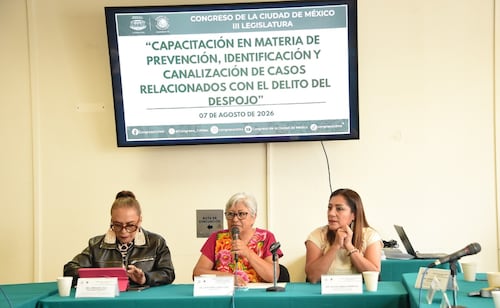
Staff members at Mexico City's Citizen Attention Modules have received specialized training to combat property dispossession, a crime that affects the assets, legal security, and peace of mind of thousands of families. The training, titled "Training in the Prevention, Identification, and Referral of Cases Related to the Crime of Dispossession," was conducted by the Secretariat of Government, the Legal Counsel, and the Public Registry of Property and Commerce.
More than 150 workers from the Legislative Modules participated in the workshop. Deputy Juana María Juárez López, president of the Committee for Citizen Attention, Orientation, and Complaints, emphasized that this training will enable module personnel to assist in addressing property dispossession. She reaffirmed the commitment to continuous training and institutional actions to equip staff with comprehensive strategies promoted by the Head of Government to halt and combat this crime.
Deputy Xóchitl Bravo highlighted the importance of strengthening these Citizen Attention Modules within the capital's Congress as key spaces for orientation, reception, and referral of cases. She noted that not all situations identified by citizens as dispossession necessarily constitute the crime itself, as some may involve rental conflicts, family disputes, or civil litigation. The attention provided at these modules is free, and offering legal advice to victims is presented as a non-partisan effort to help the population.
Eréndira Cruzvillegas, the legal counsel, clarified that the staff working in the Legislative Modules are not "gestores" (fixers or facilitators) but rather serve to listen to citizens' demands and channel them to the appropriate authorities. She also pointed out that the crime of dispossession is not increasing, with approximately nine reports filed daily, indicating a constant level of this offense rather than a surge.
DistantNews Editorial
Originally published by El Universal in Spanish. Translated, summarized, and contextualized by our editorial team with added local perspective. Read our editorial standards.
More Stories

From Our Blog

What Press Freedom Means for the News You Read

What Gets Lost (and Found) When News Is Translated

The Critical Role of Diaspora Media in Global News

What Travellers Should Know About Countries with Restricted Press

A Digital Nomad's Guide to Following Local News
