


Mexico Open to Revising T-MEC Rules of Origin, President Sheinbaum Says
Translated from Spanish, summarized and contextualized by DistantNews.
At a glance
News
Sources not specified
Context piece
- Mexican President Claudia Sheinbaum stated Mexico is open to revising T-MEC rules of origin if they equitably recognize national production.
- Sheinbaum indicated this was a key point in her meeting with U.S. Trade Representative Jamieson Greer.
- The automotive sector is a major focus, with Mexico willing to analyze proposals to increase regional content if calculations include all North American production.
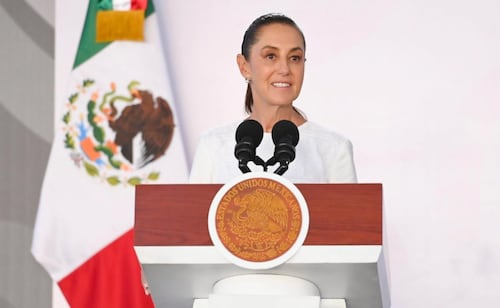
Mexico is prepared to renegotiate the rules of origin within the T-MEC trade agreement, provided that any changes fairly acknowledge Mexican production, President Claudia Sheinbaum announced. She emphasized that modifications should not exclusively benefit U.S. manufacturing.
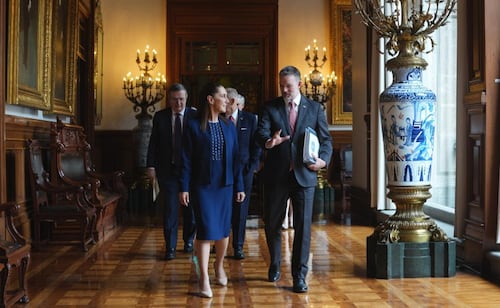
This stance was a central theme during her recent discussion with U.S. Trade Representative Jamieson Greer, as part of ongoing dialogues on the economic relationship between the two nations. "They are asking for more rules of origin. We said yes, but that Mexico is taken into account, not just what is manufactured in the United States," Sheinbaum stated during her morning press conference.
The automotive industry stands out as a particularly significant area for these discussions. The production of vehicles and auto parts is deeply integrated across North America. The U.S. has proposed increasing the regional content requirement for T-MEC benefits, potentially from 70% to 90%. Mexico is open to considering this, but insists that any calculation must encompass all regional production, including that originating within Mexico.
Sheinbaum stressed that any adjustments to the rules of origin must enhance North America's competitiveness without disrupting the balance among the treaty's partners. The goal is to strengthen the region's economic standing while ensuring fair recognition of each member's contribution.
They are asking for more rules of origin. We said yes, but that Mexico is taken into account, not just what is manufactured in the United States.
DistantNews Editorial
Originally published by El Universal in Spanish. Translated, summarized, and contextualized by our editorial team with added local perspective. Read our editorial standards.
More Stories
From Our Blog

What Press Freedom Means for the News You Read

What Gets Lost (and Found) When News Is Translated

The Critical Role of Diaspora Media in Global News

What Travellers Should Know About Countries with Restricted Press

A Digital Nomad's Guide to Following Local News
