


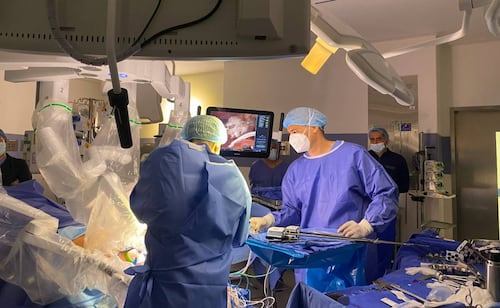
Mexico performs first robotic-assisted liver transplant on a child
Translated from Spanish, summarized and contextualized by DistantNews.
At a glance
News
Official statement
Outcome reported
- Mexico's Naval Medical Center successfully performed its first robotic-assisted liver transplant on a three-year-old girl.
- The procedure involved a Da Vinci robotic system and collaboration between the Health Ministry and international specialists.
- This milestone highlights Mexico's advancement in high-tech surgical procedures and its commitment to improving healthcare access.
Mexico has achieved a significant milestone in pediatric surgery with the successful completion of its first robotic-assisted liver transplant on a three-year-old girl. The groundbreaking procedure took place at the Naval Medical Center (CEMENAV), operated by the Secretariat of the Navy (Semar).
The complex operation utilized the Da Vinci robotic surgical system, marking a pivotal moment in the exchange of knowledge for high-complexity procedures. This achievement was the result of a joint effort between the Ministry of Health, through the National Transplant Center (CENATRA), and the Naval Medical Center. International medical specialists, leaders in robot-assisted organ transplantation, also contributed to the success.
Semar emphasized that this procedure represents a landmark in transplant surgery, reinforcing the use of highly specialized technology within the national health system. It positions Mexico as a leader in incorporating innovative tools that enhance surgical precision, minimize invasiveness, and promote faster recovery for patients. The Secretariat stated that this advancement reflects the institutions' dedication to fostering technological innovation in health services, improving capabilities, strengthening inter-institutional cooperation, and expanding access to specialized medical procedures for the population, particularly pediatric patients.
This success underscores the power of collaborative, multidisciplinary efforts. It demonstrates how coordinated action and teamwork can advance a healthcare system, making it more responsive, modern, and patient-centered. The integration of advanced technology like the Da Vinci system promises improved outcomes for complex medical interventions in Mexico.
This advance reflects the commitment of institutions to promote technological innovation in health services, improve their capabilities, strengthen inter-institutional cooperation, and expand access to high-specialty medical procedures for the benefit of the population and in this case pediatric patients.
DistantNews Editorial
Originally published by El Universal in Spanish. Translated, summarized, and contextualized by our editorial team with added local perspective. Read our editorial standards.
More Stories


From Our Blog

What Press Freedom Means for the News You Read

What Gets Lost (and Found) When News Is Translated

The Critical Role of Diaspora Media in Global News

What Travellers Should Know About Countries with Restricted Press

A Digital Nomad's Guide to Following Local News
