

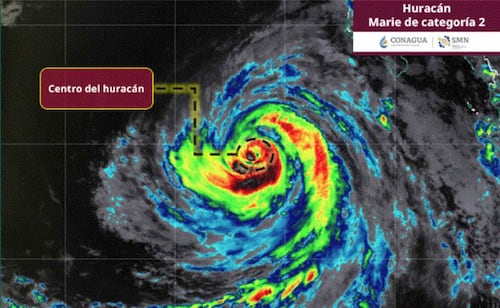

Mexico's 2026 hurricane season to begin June 1; forecasters predict 11-15 Atlantic cyclones
Translated from Spanish and summarized by DistantNews. Read the original for the full story.
At a glance
News
Official statement
New plan
- Mexico's Atlantic hurricane season officially begins on June 1, 2026, impacting the Caribbean Sea and Gulf of Mexico.
- Forecasters predict 11 to 15 tropical cyclones for the Atlantic basin, with 1 to 2 potentially being intense hurricanes.
- Authorities emphasize the importance of early preparation for potential impacts, using the Saffir-Simpson scale to classify hurricane intensity.
Mexico is preparing for its Atlantic hurricane season, which officially commences on June 1, 2026. This date marks the beginning of a six-month period of heightened scientific monitoring for phenomena affecting the Caribbean Sea and the Gulf of Mexico.
The National Meteorological Service (SMN) forecasts between 11 and 15 tropical cyclones developing in the Atlantic basin. Of these, projections suggest 7 to 8 will reach tropical storm strength, 3 to 5 will become moderate hurricanes (Category 1 or 2), and 1 to 2 are expected to be intense hurricanes (Category 3, 4, or 5). These numbers are consistent with the historical average of 14 systems recorded between 1991 and 2020.
In parallel, the Pacific Ocean is expected to experience greater activity, with an estimated 18 to 21 cyclones. This brings the national forecast to a potential total of 36 systems across both coastlines. Civil protection agencies stress that proactive preparation is the most effective strategy for safeguarding the population.
Emergency management relies on the Saffir-Simpson Hurricane Wind Scale, an international standard that categorizes hurricanes based on sustained wind speeds and predicted structural damage. The scale ranges from Category 1, with winds of 119-153 km/h causing damage to roofs and trees, up to Category 5, with winds exceeding 252 km/h, capable of causing total destruction of structures and severe coastal flooding.
About this summary
Originally published by El Universal in Spanish. Translated, summarized, and contextualized automatically by DistantNews, with a note on how the source frames the story. Not individually reviewed before publishing. How this works.
More Stories

From Our Blog

What Press Freedom Means for the News You Read

News in Translation: What Gets Lost, and How We Keep the Framing

Diaspora Media: How Communities Abroad Follow Home

Traveling Where the Press Is Not Free: How to Read the News There

The Digital Nomad's Guide to Local News
