


Mexico's Education Ministry Studies Digital Device Regulations for Schools
Translated from Spanish, summarized and contextualized by DistantNews.
At a glance
News
Named sources
Ongoing story
- Mexico's Ministry of Public Education (SEP) is studying global regulations on digital devices and platforms in schools.
- The goal is to raise awareness and set limits, not impose restrictions, to protect children and adolescents.
- The SEP aims to foster digital citizenship where technology aids learning without compromising critical thinking or well-being.
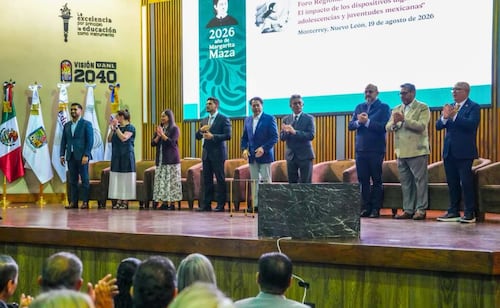
Mexico's Ministry of Public Education (SEP) is actively examining national and international experiences to formulate policies regarding the use of digital devices, platforms, and social media, particularly within school environments. Public Education Secretary Mario Delgado emphasized that the initiative is not about imposing restrictions but rather about fostering awareness and collaboratively establishing boundaries to safeguard children and adolescents. "This is not about imposing anything, but about reaching a progressive measure, generating awareness, and together, taking steps and setting limits," Delgado stated during the second Regional Northeast Forum, "Life in Front of the Screen: The Impact of Digital Devices on Mexican Children, Adolescents, and Youth," held at the Autonomous University of Nuevo León (UANL). He stressed the importance of cultivating a digital culture and citizenship where artificial intelligence complements, rather than replaces, critical thinking. The objective is to ensure that mobile phones and technological tools serve as resources for users, rather than instruments of control. The SEP plans to consult over a million teachers regarding the presence of digital devices in schools, with a pilot program set to be implemented in 200,000 educational institutions. Addressing students, educators, specialists, researchers, and parents, Delgado asserted that the discussion must be grounded in evidence and public responsibility. This requires collaboration among educational authorities, teachers, families, and experts to develop measures that align digital tools with educational goals and contribute to the holistic well-being and development of young people. The SEP also acknowledged the responsibility of companies designing platforms, particularly those that employ techniques to capture user attention, especially among minors, due to risks like cyberbullying, sexual harassment, and exposure to unsolicited violent or sexual content. Simultaneously, the ministry recognizes the benefits of technological resources and AI in knowledge creation and dissemination, advocating for a balance between leveraging these advantages and protecting the welfare of younger generations. Currently, 17 Mexican states have some form of regulation concerning digital devices in schools, while five others are actively discussing the issue. Globally, over 114 countries have implemented measures related to digital platforms, social media, or their use in educational settings.
This is not about imposing anything, but about reaching a progressive measure, generating awareness, and together, taking steps and setting limits.
DistantNews Editorial
Originally published by El Universal in Spanish. Translated, summarized, and contextualized by our editorial team with added local perspective. Read our editorial standards.
More Stories



From Our Blog

What Press Freedom Means for the News You Read

What Gets Lost (and Found) When News Is Translated

The Critical Role of Diaspora Media in Global News

What Travellers Should Know About Countries with Restricted Press

A Digital Nomad's Guide to Following Local News
