

Mexico's President Sheinbaum Defends Cuba's Self-Determination, Criticizes Blockade
Translated from Spanish, summarized and contextualized by DistantNews.
At a glance
News
Sources not specified
Context piece
- Mexican President Claudia Sheinbaum reaffirmed her support for Cuba's self-determination and criticized the economic blockade against the island.
- She stated that the blockade harms the people, not the governments, and has discussed the issue with U.S. President Donald Trump.
- Sheinbaum also commented on the political landscape in Latin America, noting that social movements resist attempts to reverse social rights.
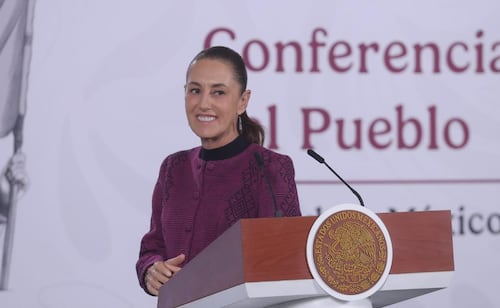
Mexican President Claudia Sheinbaum Pardo has voiced strong support for the self-determination of peoples and unequivocally rejected the economic blockade imposed on Cuba. She emphasized that such measures primarily harm the Cuban population rather than the government.
During her remarks, Sheinbaum revealed that she has addressed the situation in Cuba with U.S. President Donald Trump in their previous phone conversations. She reiterated Mexico's long-standing opposition to the blockade, a stance consistent with the country's diplomatic tradition. "We do not agree with blockades. They harm the people, not the governments, they harm the people," she stated firmly.
President Sheinbaum also touched upon the broader political dynamics in Latin America. She observed that social movements across the region are emerging as a response to efforts aimed at curtailing hard-won social rights. This suggests a regional trend of resistance against conservative political shifts that seek to undermine established social gains.
Mexico, under Sheinbaum's leadership, is committed to upholding the principle of self-determination and pursuing solutions through dialogue. The president's comments underscore Mexico's continued adherence to its foreign policy principles regarding sovereignty and non-intervention, particularly in the context of U.S.-Cuba relations and the broader regional political climate.
DistantNews Editorial
Originally published by El Universal in Spanish. Translated, summarized, and contextualized by our editorial team with added local perspective. Read our editorial standards.
More Stories

From Our Blog

What Press Freedom Means for the News You Read

What Gets Lost (and Found) When News Is Translated

The Critical Role of Diaspora Media in Global News

What Travellers Should Know About Countries with Restricted Press

A Digital Nomad's Guide to Following Local News
