

Mexico's Top Court Backs Parents of Teen with Down Syndrome Who Died Amid Medical Issues
Translated from Spanish, summarized and contextualized by DistantNews.
At a glance
News
Sources not specified
Outcome reported
- Mexico's Supreme Court granted protection to the parents of a teenager with Down syndrome who died due to alleged medical irregularities.
- The teenager died after being transferred between hospitals during a power outage that disrupted essential medical services.
- The court found the lower tribunal failed to adequately consider the rights of persons with disabilities, criticizing an 'eugenic perspective' in its initial ruling.
Mexico's Supreme Court of Justice of the Nation (SCJN) has granted protection to the parents of a 17-year-old adolescent with Down syndrome who died following alleged irregularities in medical care. The case originated from a lawsuit filed by the family after the teenager's death during a hospital transfer.
It is noted that the Collegiate Tribunal analyzed the case from an eugenic perspective of disability, assuming that the adolescent's disability and underlying conditions explained the outcome of his treatment in the private hospital, ignoring the irregularities in the provision of hospital services.
The transfer was necessitated when a flood disrupted essential services at a private hospital, leading to a suspension of the electrical supply. This forced a switch from mechanical ventilation to manual assistance. The family sued the hospital for alleged deficiencies in service and resulting damages.
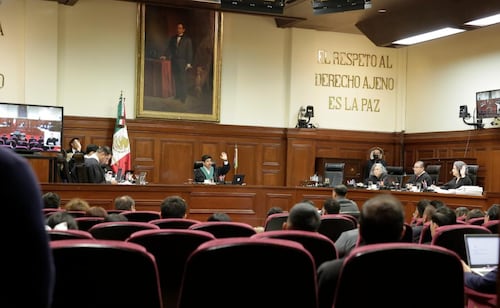
The SCJN overturned a February 13, 2025, ruling by the Second Collegiate Tribunal in Civil Matters of the First Circuit. The Supreme Court determined that the lower tribunal had failed to uphold the human rights of a person with a disability. Minister Sara Irene Herrerías Guerra, the rapporteur, stated that the tribunal had analyzed the case from an 'eugenic perspective,' implying the adolescent's underlying conditions explained the outcome rather than addressing the hospital's service failures.
This reasoning is incompatible with the social model of disability that this Supreme Court has adopted through its jurisprudence. Treating the condition of disability as a sufficient explanation for adverse results is based on the premise that people with disabilities have less value than other people or enjoy a lower quality of life.
Minister Herrerías Guerra emphasized that judges must be particularly sensitive to the health status and clinical needs of individuals with disabilities. She argued that assuming a disability sufficiently explains adverse outcomes is rooted in the belief that people with disabilities have less value or a lower quality of life. The court stressed the need for robust measures to compensate for information asymmetries, especially for individuals with disabilities, to avoid placing an undue burden of proof on them.
It is warned that the Collegiate Tribunal analyzed the case under an eugenic perspective of disability, assuming that the adolescent's disability and underlying conditions explained the outcome of his treatment in the private hospital, ignoring the irregularities in the provision of hospital services.
DistantNews Editorial
Originally published by El Universal in Spanish. Translated, summarized, and contextualized by our editorial team with added local perspective. Read our editorial standards.
More Stories



From Our Blog

What Press Freedom Means for the News You Read

What Gets Lost (and Found) When News Is Translated

The Critical Role of Diaspora Media in Global News

What Travellers Should Know About Countries with Restricted Press

A Digital Nomad's Guide to Following Local News
