

Mexico's World Cup jersey sparks debate over cultural appropriation
Translated from Spanish, summarized and contextualized by DistantNews.
At a glance
News
Named sources
Context piece
- Mexico's national soccer team unveiled its official jersey for the 2026 World Cup, featuring a limited edition designed in collaboration with artisans from Puebla.
- The collaboration sparked controversy online, with accusations of cultural appropriation and labor exploitation against Adidas and the brand Someone Somewhere.
- Critics argue that corporations profit excessively from indigenous communities' identity without fair compensation, while artisans involved in the production report fair wages and economic stability.
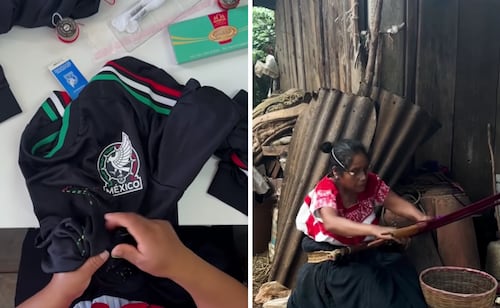
Mexico's national soccer team has ignited a fierce debate online with the launch of its official 2026 World Cup jersey. The controversy centers on a limited-edition version that features designs by artisans from the Sierra Norte region of Puebla, a collaboration between sportswear giant Adidas and the brand Someone Somewhere.
Across digital platforms, a significant backlash has emerged, with many internet users labeling the partnership an act of "cultural appropriation" and "labor exploitation." Critics contend that multinational corporations are disproportionately profiting from the cultural heritage of indigenous communities, offering inadequate compensation for the use of their traditional iconography. Videos shared by fashion activists and indigenous rights advocates have garnered millions of views, accusing the brands of using the image of Nahua women from Naupan, Puebla, for purely advertising purposes.
These online critics suggest that the companies pressured artisans to adapt ancestral designs to fit "contemporary techniques" dictated by corporate standards. Many view these practices as a superficial display of social inclusion that perpetuates the economic vulnerability of the craftswomen. The indignation intensified with suspicions that individual payments represent a minimal fraction of the global profits generated by the tournament, leading to accusations of "corporate image laundering."
However, this widespread online criticism stands in stark contrast to field research conducted by The New York Times. The newspaper's investigation featured direct testimonies from the women involved in the textile workshops in Puebla. These artisans confirmed that the remuneration they received was fair and that the project provided them with unprecedented economic stability in their mountainous region. The report suggests that the introduction of QR codes and the signatures of the creators on the labels are intended as commercial hooks to justify the collection's price point.
DistantNews Editorial
Originally published by El Universal in Spanish. Translated, summarized, and contextualized by our editorial team with added local perspective. Read our editorial standards.
More Stories

From Our Blog

What Press Freedom Means for the News You Read

What Gets Lost (and Found) When News Is Translated

The Critical Role of Diaspora Media in Global News

What Travellers Should Know About Countries with Restricted Press

A Digital Nomad's Guide to Following Local News
