


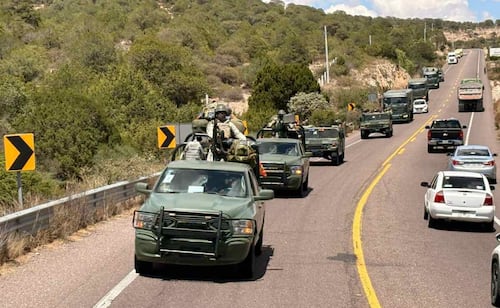
Mexico sends 600 additional troops to Durango to combat organized crime
Translated from Spanish, summarized and contextualized by DistantNews.
At a glance
News
Official statement
Ongoing story
- Mexico's Secretariat of National Defense has deployed 600 additional military personnel to Durango.
- These troops will bolster security operations against organized crime in the state.
- The deployment aims to strengthen peace and public safety efforts in coordination with local authorities.
Durango is receiving a significant reinforcement of 600 military personnel from Mexico's Secretariat of National Defense (Sedena). This deployment is intended to intensify security operations and combat organized crime within the state. The newly arrived troops include 300 members of the "Fuerza de Tarea Conjunta México" and 300 from the Fourth Armored Reconnaissance Regiment. They join 90 Special Forces members who arrived earlier in June as part of the National Public Security Strategy.
These forces will integrate with the operations led by the Tenth Military Zone, working in collaboration with federal, state, and municipal authorities. The Fourth Armored Reconnaissance Regiment will specifically focus on enhancing security along communication routes, a task currently managed by the National Guard in Durango. The deployed troops are mandated to conduct patrols, ground reconnaissance, establish security checkpoints, and implement deterrent actions in priority areas. Their operations will adhere to the National Law on the Use of Force and uphold respect for human rights.
This substantial military presence aims to contribute to the ongoing efforts to build peace and strengthen public safety for the residents of Durango. The coordinated approach with various levels of government underscores a commitment to addressing the complex security challenges posed by organized crime in the region. The deployment signifies a heightened focus on restoring and maintaining order, with the military playing a crucial role in supporting local law enforcement and security agencies.
DistantNews Editorial
Originally published by El Universal in Spanish. Translated, summarized, and contextualized by our editorial team with added local perspective. Read our editorial standards.
More Stories



From Our Blog

What Press Freedom Means for the News You Read

What Gets Lost (and Found) When News Is Translated

The Critical Role of Diaspora Media in Global News

What Travellers Should Know About Countries with Restricted Press

A Digital Nomad's Guide to Following Local News
