

Michał Kamiński Returns Ukrainian Orders: 'They Did Not Condemn UPA'
Translated from Polish, summarized and contextualized by DistantNews.
At a glance
News
Named sources
Outcome reported
- Polish Senator Michał Kamiński announced he is returning two state awards from Ukraine due to historical policy disputes.
- Kamiński cited difficulties with the exhumation of victims of the Volhynia massacre and the honoring of UPA figures as primary reasons.
- He expressed disappointment that Ukraine has not unequivocally condemned the perpetrators of the Volhynia massacre, despite significant Polish and European support.
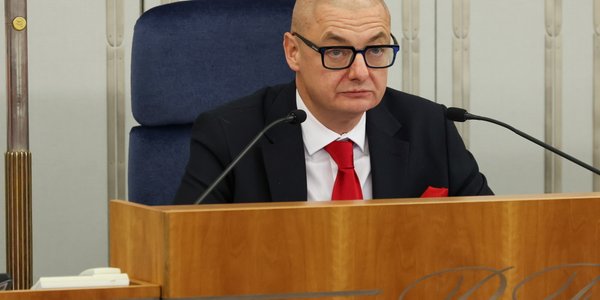
Polish Senator Michał Kamiński has decided to return two state awards bestowed upon him by Ukraine, citing ongoing disputes over historical policy as the reason. In a letter addressed to the Ukrainian ambassador, Kamiński explained that he received these honors for his long-standing commitment to building a strategic partnership between Poland and Ukraine, including authoring the first European Parliament report on Ukraine's EU membership.
I accepted these awards as a sign of recognition for many years of commitment to building a strategic partnership between Poland and Ukraine.
The senator highlighted that Poland has consistently advocated for Ukraine in Europe, offering political, diplomatic, and economic support while consciously downplaying historical grievances. However, he stated that a lack of symmetry in how national memory issues are treated, particularly concerning the exhumation of victims of the Volhynia massacre, has become a significant obstacle. Kamiński contrasted the persistent difficulties in conducting exhumations of Polish victims with the relatively unimpeded exhumations of Wehrmacht soldiers on Ukrainian territory, labeling this a "hierarchy of memory" that Poland cannot accept.
Particularly telling is the symbol of the long-standing difficulties associated with the exhumation of Polish victims of the Volhynia massacre, while the exhumations of Wehrmacht soldiers were carried out on Ukrainian territory without significant administrative or political obstacles.
Kamiński expressed profound disappointment that, despite years of substantial support from Poland and Europe, Ukraine has not issued an unequivocal condemnation of those responsible for the Volhynia massacre and other mass killings perpetrated by the Organization of Ukrainian Nationalists (OUN) and the Ukrainian Insurgent Army (UPA). He found it difficult to comprehend why individuals associated with these atrocities are still presented as patriotic role models for younger generations of Ukrainians in the 21st century.
This is an example of a 'hierarchy of memory' that Poland cannot agree with.
While acknowledging that every nation has the right to choose its own heroes, Kamiński emphasized Poland's obligation to respond when individuals responsible for crimes against civilians are glorified. He concluded that the decision to return the awards, made with "deep regret," stems from this fundamental disagreement over historical narratives and the recognition of past atrocities.
The greater is my astonishment and disappointment that after years of such enormous support from Poland and all of Europe, Ukraine has still not managed to unequivocally condemn the perpetrators of the Volhynia massacre and the mass murders committed by the OUN and UPA against citizens of the Republic of Poland.
DistantNews Editorial
Originally published by Rzeczpospolita in Polish. Translated, summarized, and contextualized by our editorial team with added local perspective. Read our editorial standards.
More Stories



From Our Blog

What Gets Lost (and Found) When News Is Translated

The Critical Role of Diaspora Media in Global News

What Travellers Should Know About Countries with Restricted Press

A Digital Nomad's Guide to Following Local News

How the Same Story Looks Different in Different Countries
