


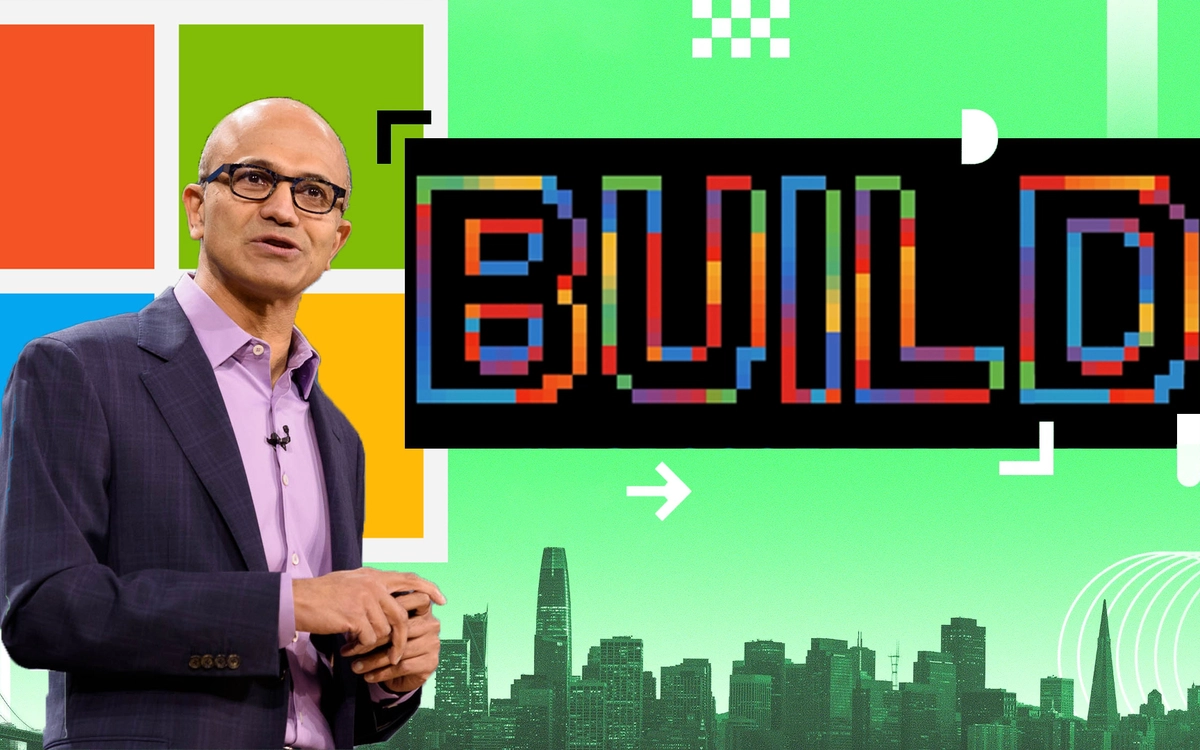
Microsoft Launches 7 New AI Models, Aiming to Reduce Reliance on OpenAI
Translated from Vietnamese, summarized and contextualized by DistantNews.
At a glance
News
Sources not specified
Context piece
- Microsoft unveiled seven new AI models at its Build 2026 event, signaling a strategic shift towards developing its own AI technology.
- The new models, part of the MAI series, include MAI-Thinking-1, Microsoft's first self-developed reasoning AI model.
- These advancements aim to reduce Microsoft's reliance on OpenAI and build a comprehensive AI ecosystem for both consumers and businesses.
Microsoft is intensifying its push into artificial intelligence by launching seven new AI models, a move that underscores its ambition to become a leading AI developer in its own right. The announcement, made at the Build 2026 event, signals a strategic pivot for the tech giant, which has long been a key partner to OpenAI.
The centerpiece of the new releases is MAI-Thinking-1, Microsoft's inaugural self-developed AI model focused on reasoning. This model boasts approximately 35 billion parameters and is engineered to handle multi-step reasoning tasks, long contexts, and programming assistance, all while aiming for lower costs compared to larger AI models. Microsoft emphasized that MAI-Thinking-1 was trained on clean data, explicitly avoiding third-party model data distillation, highlighting the company's commitment to independent AI research capabilities.
Microsoft presented these new models as crucial steps in building a comprehensive AI ecosystem. The lineup includes MAI-Code-1-Flash for code generation, intended for integration into GitHub Copilot and Visual Studio Code. For creative applications, MAI-Image-2.5 and its faster counterpart MAI-Image-2.5-Flash were introduced for image generation and editing. Additionally, MAI-Voice-2 aims to enhance natural voice synthesis with broader language support, and MAI-Transcribe-1.5 promises significantly faster speech-to-text processing.
These new MAI-series models, including specialized variants for the Microsoft Foundry platform, are designed to serve both individual users and enterprise clients. The company's strategy appears focused on leveraging its proprietary AI technology to reduce dependence on external partners like OpenAI and solidify its position as a major player in the rapidly evolving AI landscape.
DistantNews Editorial
Originally published by Tuổi Trẻ in Vietnamese. Translated, summarized, and contextualized by our editorial team with added local perspective. Read our editorial standards.
More Stories



From Our Blog

What Gets Lost (and Found) When News Is Translated

The Critical Role of Diaspora Media in Global News

What Travellers Should Know About Countries with Restricted Press

A Digital Nomad's Guide to Following Local News

How the Same Story Looks Different in Different Countries
