


Middle East crisis: Russians spied on military using home cameras
Translated from Polish, summarized and contextualized by DistantNews.
At a glance
Analysis
Named sources
Context piece
- The Middle East's instability directly impacts Europe's daily life, economy, and security.
- Western models of democracy have struggled to take root in the region due to complex cultural and political factors.
- Fundamental crises like desertification and food insecurity drive migration, affecting Europe's demographics.
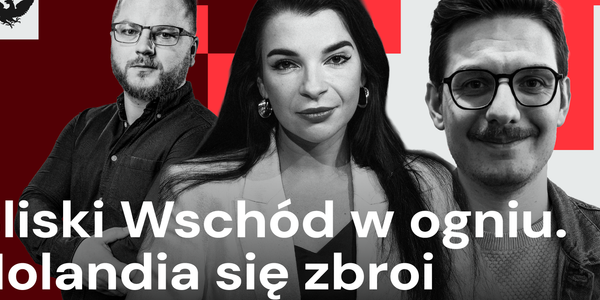
The Middle East, often perceived as a distant conflict zone by many Europeans, has profound and direct implications for daily life, the economy, and security across the continent. Dr. Magdalena El Ghamari, president of the El Karama Foundation, emphasizes that the region's interconnectedness means instability there reverberates throughout Europe.
Attempts to impose external democratic frameworks have repeatedly failed in the Middle East's intricate mosaic of cultures and religions. The experiences in Iraq and Afghanistan demonstrate that Western notions of democracy do not align with realities shaped by strong clan ties, nepotism, and the influence of local militias. In this environment, pragmatism, rather than electoral processes, often dictates survival and power. Abu Muhammad al-Dżaulani, leader of Syria's HTS, exemplifies this shift, evolving from an Al-Qaeda figure to a political player forging local coalitions and engaging with international powers.
For the average resident, geopolitical struggles often take a backseat to the immediate fight for survival. Worsening desertification, droughts, and a lack of food and water security destabilize fragile states like Yemen, Syria, and Lebanon. These fundamental crises are significant drivers of migration, both economic and hybrid, which in turn reshapes demographic landscapes in Europe, including Poland.
Dr. El Ghamari stresses that Europe can no longer afford to believe it is isolated from these issues. "This Middle East is also here with us," she states, referring to both the personal and economic connections. She highlights that security, whether it be food, social, or internal, provides the essential framework for normal functioning, allowing people to send their children to school without fear of snipers and to afford basic necessities like bread, a stark contrast to the realities in some parts of the region.
This Middle East is also here with us. It is not only in terms of personnel, but in economic terms. These are interconnected vessels. [...] Everyone needs a framework within which they function. That framework is security, that framework is food security, that framework is social or internal security. [...] [It's about] normal functioning, where you can take your children to kindergarten and school, and snipers won't shoot at them, and 10 loaves of bread won't cost 200 zlotys. Because that's how it functions in some countries.
DistantNews Editorial
Originally published by Rzeczpospolita in Polish. Translated, summarized, and contextualized by our editorial team with added local perspective. Read our editorial standards.
More Stories
From Our Blog

What Gets Lost (and Found) When News Is Translated

The Critical Role of Diaspora Media in Global News

What Travellers Should Know About Countries with Restricted Press

A Digital Nomad's Guide to Following Local News

How the Same Story Looks Different in Different Countries
