


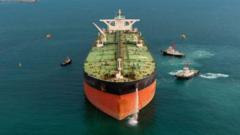
Middle East oil tanker threats worst since Iran war, analysts say
Translated from English, summarized and contextualized by DistantNews.
At a glance
News
Named sources
Context piece
- Analysts warn that threats to oil tankers in the Middle East are at their worst since the Iran war began.
- Attacks on ships in the Red Sea have increased, forcing tankers to avoid the Strait of Hormuz.
- This dual threat is disrupting oil flows and impacting the global market.
The threat to oil tankers in the Middle East has reached its most severe point since the start of the Iran war, according to maritime analysts. This heightened risk follows a series of attacks on vessels navigating the Red Sea, an alternative route used by some tankers after Iran blocked the Strait of Hormuz.
In terms of threat to the trade of crude, we're at the worst period that we've been in since this since this crisis began.
Matthew Wright, an analyst at ship-tracking firm Kpler, described the current situation as the "worst period" for crude oil trade threats since the crisis began. Daily traffic through the Strait of Hormuz has plummeted to single digits, a fraction of the over 100 vessels that passed daily before the conflict. While a temporary peace deal in June saw a slight increase in traffic, renewed strikes between Iran and the US have significantly curtailed movement.
Compounding the issue, many ships are now "going dark" by disabling their transponders to evade detection while crossing the Strait. Furthermore, recent attacks by Yemen's Houthi fighters on Saudi tankers in the Red Sea have escalated risks on this alternative route. Tim Wilkins of Intertanko, a trade body for tanker owners, noted the industry faces a "broadening, deteriorating, and increasingly complex security situation" that extends into Saudi waters and parts of the Red Sea.
Not only is the ongoing situation in the Strait of Hormuz constraining oil flows, but now a big factor that was helping to balance the market is now also under threat. It's a problem stacked on top of a problem.
The combined pressures on both the Strait of Hormuz and the Red Sea shipping lanes are creating a significant problem for the global oil market. The number of commodity vessels passing through the Bab el-Mandeb strait has dropped, with a notable number of those attempting to avoid detection. While the Houthi threat is primarily targeted at Saudi shipping, the overall impact on freedom of navigation and oil flows to markets like Asia is substantial, with daily crude oil loadings for Asia falling to around four.
We now have the high-risk area going up to Saudi Arabian waters and extending into parts of the Red Sea. So that's having another impact on the market, on freedom of navigation as well.
DistantNews Editorial
Originally published by BBC News in English. Translated, summarized, and contextualized by our editorial team with added local perspective. Read our editorial standards.
More Stories



From Our Blog

What Gets Lost (and Found) When News Is Translated

The Critical Role of Diaspora Media in Global News

What Travellers Should Know About Countries with Restricted Press

A Digital Nomad's Guide to Following Local News

How the Same Story Looks Different in Different Countries
