


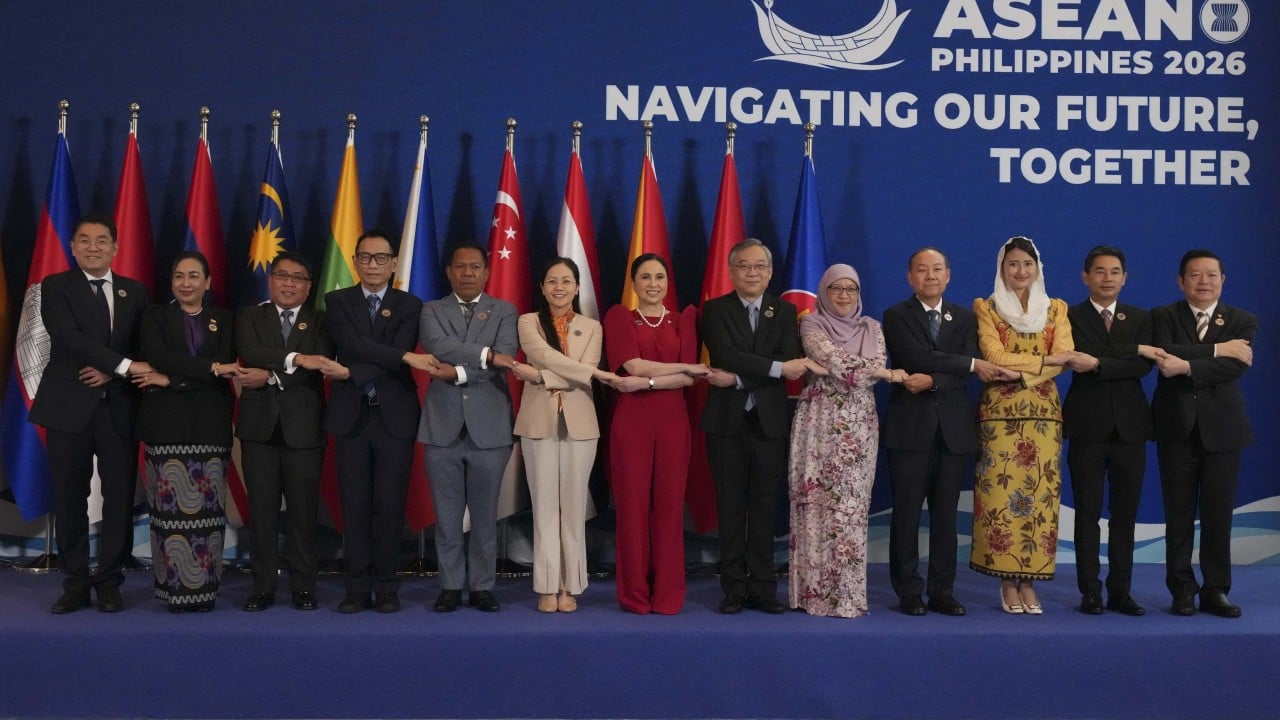
Middle powers build fluid alliances amid US-China rivalry
Translated from English, summarized and contextualized by DistantNews.
TLDR
- Middle powers are forming fluid coalitions and partnerships to navigate US-China rivalry and global unpredictability.
- These alliances are adaptable and fragmented, allowing smaller neutral states to diversify partnerships without choosing sides.
- The trend is driven by the uncertainty of US foreign policy, even beyond the Trump presidency.
The South China Morning Post, a leading voice in Asian analysis, highlights a significant geopolitical shift: middle powers are actively constructing flexible alliances to counter the growing US-China rivalry and the inherent unpredictability of global politics. This strategic pivot, as explained by Professor Kuik Cheng-Chwee of the National University of Malaysia, involves building 'multi-layered coalitions across sectors' that are intentionally fluid and adaptable.
‘Middle-power realignments’ and ‘multi-layered coalitions across sectors’ are the key [phases] we’re going to see more and more.
This approach allows nations to hedge against risks posed by major powers, particularly the United States, whose foreign policy remains uncertain regardless of presidential administrations. The formation of these 'middle-power realignments' creates opportunities for smaller, neutral states to broaden their international engagements without being forced to align exclusively with either the US or China. This diversification is crucial for maintaining autonomy and mitigating the dangers of geopolitical entanglement.
Such coalitions are partially overlapped, fragmented and fluid. Every partner you’re collaborating with will continuously adapt and adjust their policy.
From a regional perspective, this development is not merely about geopolitical maneuvering; it reflects a deep-seated desire for stability and self-determination in an increasingly volatile world. While Western media might focus on the strategic implications for global power balances, publications like the South China Morning Post emphasize the agency and ingenuity of regional actors in shaping their own destinies. The emphasis on 'fluid coalitions' underscores a pragmatic approach to international relations, prioritizing national interests and adaptability in a multipolar environment.
Alignment is a partnership with a deep convergence of interests, institutionalised consultation and “some degree of compatibility-enhancement coordination”.
DistantNews Editorial
Originally published by South China Morning Post in English. Translated, summarized, and contextualized by our editorial team with added local perspective. Read our editorial standards.
More Stories

From Our Blog

Countries Without a Free Press: What You Need to Know

What Press Freedom Means for the News You Read

What Gets Lost (and Found) When News Is Translated

The Critical Role of Diaspora Media in Global News

What Travellers Should Know About Countries with Restricted Press
