

Miners protest unpaid wages in Turkey, demand government intervention
Translated from Turkish, summarized and contextualized by DistantNews.
At a glance
News
Named sources
Ongoing story
- Miners in Eskişehir, Turkey, are protesting unpaid wages from Doruk Madencilik.
- Workers have been demonstrating for six days, demanding their legal rights.
- They are appealing to the government for intervention.
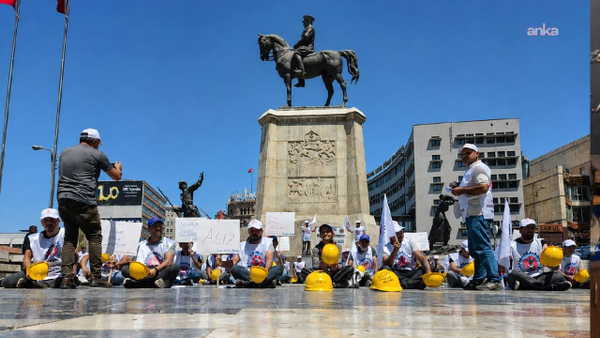
Miners employed by Doruk Madencilik in Eskişehir, operating under Yıldızlar SSS Holding, continue their sit-in protest for the sixth consecutive day. Members of the Turkish Mine Workers' Union (Türk Maden-İş) are demanding payment of their wages, which they claim have been withheld despite official commitments.
What more can we do? Should we set ourselves on fire?
The workers gathered at Ulus Square in Ankara, chanting slogans and holding signs that read "We are hungry," "We want our rights, not charity," and "Our President, hear our voice." They also commemorated fallen miners, reading their names aloud. Passersby have shown support with applause and solidarity chants.
Talih Kocabıyık, head of the Central Anatolian branch of Türk Maden-İş, stated that the protest will continue with further actions planned. He expressed frustration over the lack of response, suggesting authorities are either ignoring or unable to hear their demands. Kocabıyık urged government officials and ministers to intervene, stating the company's management is incompetent and should step aside.
We are hungry. We want our rights, not charity. Our President, hear our voice.
One worker, who has been with the company for 13 years, voiced his desperation, asking, "What more can we do? Should we set ourselves on fire?" He recounted previous attempts to seek help at ministry buildings and the company's headquarters, which were met with police intervention. The miners are seeking a swift resolution to their plight.
We will continue with all our strength until the last drop. We need our state elders to intervene.
DistantNews Editorial
Originally published by Cumhuriyet in Turkish. Translated, summarized, and contextualized by our editorial team with added local perspective. Read our editorial standards.
More Stories



From Our Blog

What Gets Lost (and Found) When News Is Translated

The Critical Role of Diaspora Media in Global News

What Travellers Should Know About Countries with Restricted Press

A Digital Nomad's Guide to Following Local News

How the Same Story Looks Different in Different Countries
