


Mining's Legacy: Saxony Spends Millions on Past Damage
Translated from German, summarized and contextualized by DistantNews.
At a glance
News
Named sources
Context piece
- Saxony spent approximately 17.4 million euros last year on mitigating risks from former mining operations.
- Over 40 damages, ranging from cracks to sinkholes and collapses, have been reported this year.
- While preventative measures have reduced damage, natural events like floods can still cause significant issues, particularly in the Ore Mountains.
Saxony continues to grapple with the costly consequences of its historical mining activities, with the state's mining authority spending around 17.4 million euros last year to address dangers posed by former operations. Oberberghauptmann Bernhard Cramer reported that over 40 incidents have already been logged this year, encompassing a range of issues from surface cracks and subsidences to crater-like ground collapses and uncontrolled water discharges.
The consequences of mining continue to consume millions in Saxony.
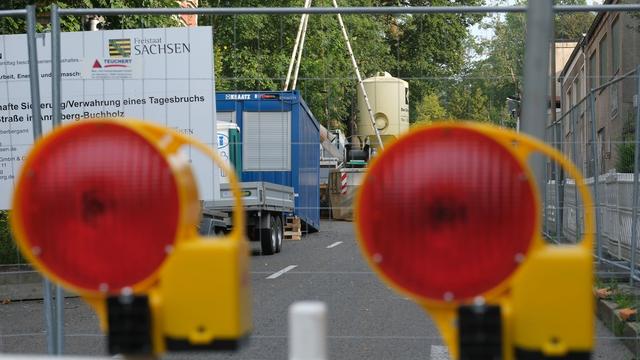
A recent sinkhole on a street in Annaberg-Buchholz, which opened up in June, drew significant attention. While no one was harmed, the road remains closed as authorities conduct geological surveys to determine the scope of necessary repairs and the timeline for completion. The city described the cavity as approximately five and a half meters deep.
This ranges from cracks and fissures, subsidences to crater-like ground collapses and shaft collapses, as well as uncontrolled water discharges.
Cramer noted that while extensive preventative measures have led to a general decrease in reported damages, with annual incidents typically ranging between 80 and 110 from 2020 to 2025, extreme weather events like floods and heavy rainfall can still trigger substantial damage. This was evident in 2002 and 2013.
The geological exploration of the sinkhole is currently underway.
The Ore Mountains, historically rich in silver and cobalt and later uranium, are particularly affected. However, coal mining regions like Zwickau, Lugau/Oelsnitz, and Freital also experience regular damage reports. Notable past incidents include the collapse of the Augustus shaft in Freital in 2022 and a sinkhole in Annaberg-Buchholz in 2013. Even former GDR uranium mining sites continue to present challenges, with a sinkhole near shaft 38 in Bad Schlema in 2014 requiring the filling of newly discovered cavities with concrete.
Subsequently, the mine workings will be secured.
DistantNews Editorial
Originally published by Die Zeit in German. Translated, summarized, and contextualized by our editorial team with added local perspective. Read our editorial standards.
More Stories


From Our Blog

What Gets Lost (and Found) When News Is Translated

How the Same Story Looks Different in Different Countries

The Critical Role of Diaspora Media in Global News

What Travellers Should Know About Countries with Restricted Press

A Digital Nomad's Guide to Following Local News
